
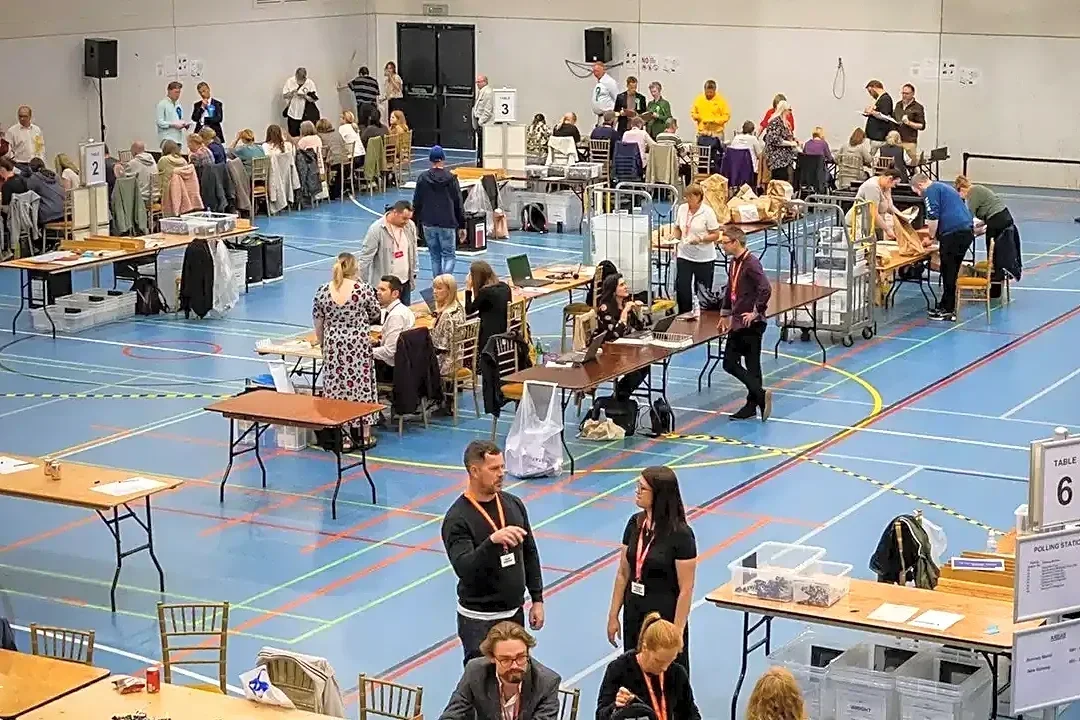

In American elections, not all demographic groups vote at the same rate. One of the most significant and growing divides is education. While it's long been true that those with more schooling are more likely to vote, this gap has widened into a chasm.
The Old Normal: A Stable Gap
Let's rewind to the mid-1980s. In the 1986 midterm elections, a gap in voter turnout based on education already existed, but it was relatively stable and less pronounced than it is today. Americans with a college degree were consistently more likely to vote than those with a high school diploma or less, a pattern documented for decades. This was considered a bedrock finding of political science. However, the difference in turnout rates between these groups was not yet the canyon it would become.
During this period, the political parties were also less sorted by education, meaning both Democrats and Republicans had significant support from voters across all educational backgrounds. The correlation between education and voting was clear, but it hadn't yet become a primary axis of political polarization.
The Great Divergence
Starting in the late 1990s and accelerating through the 2000s and 2010s, something began to change. The turnout gap between Americans with and without a college degree started to widen significantly, especially in high-stakes midterm elections. For example, the 2018 midterms saw the highest turnout rate since 1914, but the participation surge was not evenly distributed. Turnout soared among college-educated voters, while it increased much more modestly for those without a degree. By the 2022 midterms, education had become a stark dividing line not just in who votes, but how they vote. Voters with college degrees now heavily favor Democratic candidates, while those without are a core constituency for the Republican party. This alignment of educational attainment with partisan preference has transformed the electoral landscape.
Why Is the Chasm Growing?
There isn't one simple answer, but rather a convergence of factors. First, campaign strategies have become more sophisticated. Parties now use detailed data to target likely voters, and since education level is a strong predictor of turnout, campaigns may focus resources on mobilizing college-educated citizens who are already more inclined to vote. Second, the information landscape has fractured. While some theories suggest the skills gained in college (like processing complex information) make it easier to follow politics, others point to social networks. College graduates are often in social and professional circles where civic participation is a strong norm. Finally, political issues have increasingly sorted along educational lines. Debates over globalization, cultural issues, and the knowledge economy often resonate differently with voters depending on their educational background, raising the personal stakes of elections for some groups more than others.
What This Means for America
This widening turnout gap has profound consequences. When a large segment of the population—specifically those without a college degree—participates at lower rates, their concerns and priorities may be less represented in the halls of power. Policy debates can become skewed towards the interests of the more highly-educated, higher-turnout portion of the electorate. This dynamic reinforces itself; as voters feel their voices aren't heard, they may become more disengaged, further widening the gap. It creates a feedback loop where the electorate in a given election looks less and less like the population as a whole. This disparity challenges the democratic ideal of a government representing all its citizens, not just the most educated and engaged among them.