




The Volunteer State in 2000
At the dawn of the new millennium, Tennessee’s political identity was complex. While the state had two Republican Senators, Fred Thompson and Bill Frist, its nine-member House delegation was a much closer affair. Republicans held a slim 5-4 majority. This near-even split reflected a state where ticket-splitting was common and local political identities could still outweigh national party affiliation. Several of the Democrats, like Bart Gordon and Bob Clement, were part of a group known as 'Blue Dog' Democrats—fiscal conservatives who often represented rural or suburban districts and weren't afraid to buck their party's leadership. This bipartisan blend was a hallmark of Tennessee politics, but the foundation was already cracking.
The Fading of the Blue Dogs
Throughout the
2000s, the political ground shifted. The Blue Dog Coalition, which formed in the mid-1990s in response to a feeling that the national Democratic party had moved too far left, saw its influence peak and then begin a rapid decline. These conservative Democrats, who once held significant sway in Southern states like Tennessee, found themselves increasingly squeezed by the growing polarization of American politics. National trends began to matter more than local relationships. The failed 2006 Senate bid by Harold Ford Jr., a charismatic Blue Dog Democrat from Memphis, against Republican Bob Corker was a telling sign. Despite running a strong campaign, Ford couldn't overcome the state's rightward drift, signaling the end of an era for statewide Democratic competitiveness.
The 2010 Wave and a Redrawn Map
If the 2000s were a slow drift, 2010 was a political earthquake. The Republican wave election, fueled by the Tea Party movement, swept away many of the remaining conservative Democrats across the South. In Tennessee, this tidal wave gave Republicans not just more congressional seats but, crucially, total control of the state legislature heading into the 2011 redistricting cycle. For the first time, the GOP had the power to draw the state’s political boundaries for the next decade. Armed with this authority, they crafted new congressional maps that solidified their existing advantages and made it significantly harder for Democrats to compete outside of their urban strongholds in Memphis and Nashville.
A Map That Cemented Control
The power of redistricting was put on full display again following the 2020 census. In 2022, the Republican-controlled legislature passed a new congressional map that was ruthlessly effective. Its most controversial feature was the division of Davidson County, home to the solidly Democratic city of Nashville, into three separate congressional districts. For decades, Nashville had been the heart of a single district, represented for years by Blue Dog Democrat Jim Cooper. The new map carved up the city, diluting its Democratic votes across three heavily Republican districts. The move effectively eliminated the state's most prominent Democratic seat, prompting Cooper to retire and ensuring an easy Republican pickup.
Tennessee's Delegation Today
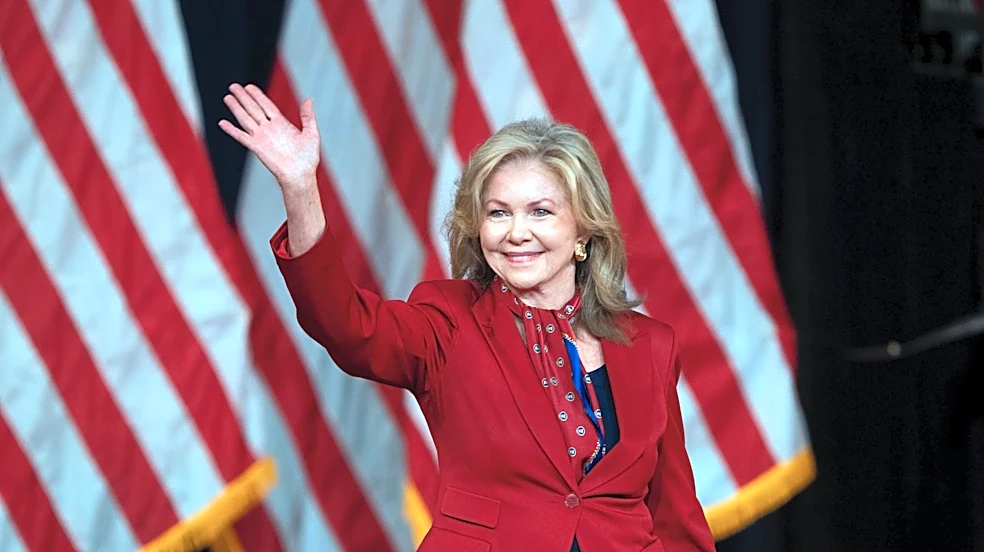
As of 2026, the transformation is complete. Both of Tennessee's U.S. Senators, Marsha Blackburn and Bill Hagerty, are Republicans. The House delegation now consists of eight Republicans and just one Democrat, Steve Cohen, who represents the Memphis area. However, recent mid-decade redistricting in 2026 has put even that last Democratic seat in jeopardy by redrawing the 9th district to be significantly more Republican, leading to Cohen's retirement. The state that once sent a diverse, bipartisan group to Washington now has one of the most uniformly conservative delegations in the country. The moderate, ticket-splitting voter of 2000 has been replaced by a highly partisan electorate, and the political map reflects this new reality.