


The Byrd Machine and the Blue Wall (1990s)
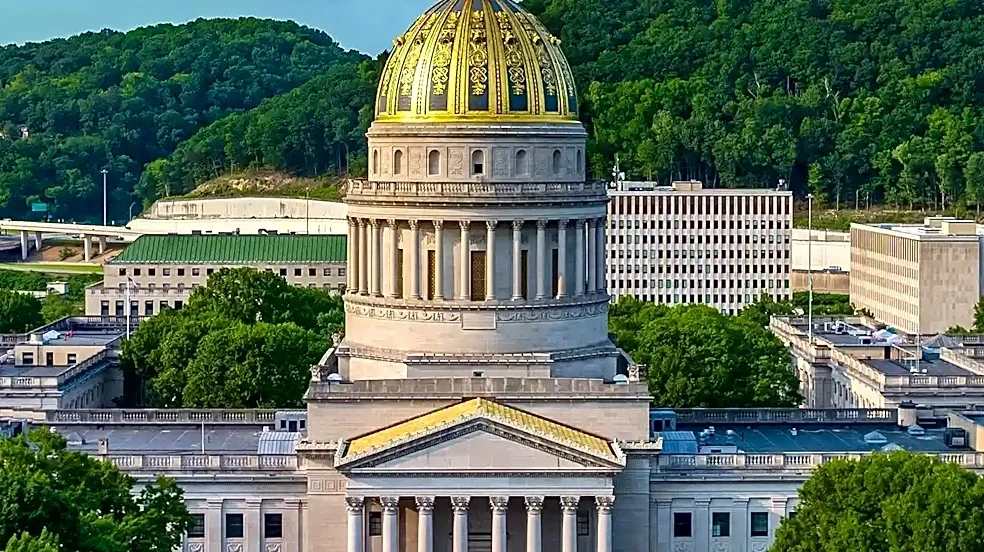
In the early 1990s, West Virginia was still reliably Democratic, a legacy of the New Deal and powerful figures like Senator Robert C. Byrd. The 1990 midterm exemplified this, with Senator Jay Rockefeller easily winning re-election with over 68% of the vote. Democrats also swept all four of the state's U.S. House seats. Even during the 1994 'Republican Revolution' that saw the GOP take control of Congress nationally, West Virginia held the line. While the rest of the country swung right, Senator Byrd won another term, and Democrats again won all of the state's congressional races, demonstrating the enduring power of the state's Democratic establishment. At the time, Republican victories at the federal level were rare, and the party held no statewide
or congressional offices.
The First Cracks Appear (2000s)
The 2000s marked the beginning of a major shift. While the state voted for George W. Bush in 2000 and 2004, its midterm voting habits remained stubbornly Democratic at the local level. In the 2002 midterms, Senator Jay Rockefeller was re-elected, and Democrats held two of the state's three House seats. This was also the year Shelley Moore Capito, a Republican, first won her House seat, signaling a crack in the 'Blue Wall.' By the 2006 midterms, the pattern of ticket-splitting was clear. The state re-elected the legendary Democrat Robert C. Byrd to the Senate for his ninth and final term with a commanding 64% of the vote. That same year, Joe Manchin was the state's popular Democratic governor. The party maintained deep control over the state legislature, but the federal-versus-state political identity was diverging.
The Red Tide Rolls In (2010 & 2014)
The 2010 midterms, held during President Barack Obama's first term, were a watershed moment. Amid a national backlash, then-Governor Joe Manchin won a special election to fill Senator Byrd's seat after his passing, but by a much closer margin than was typical for West Virginia Democrats. Republicans also made significant gains in the state legislature. The true sea change came in the 2014 midterms. Republicans captured control of both houses of the West Virginia Legislature for the first time in more than 80 years. In the marquee race, Republican Shelley Moore Capito defeated Democrat Natalie Tennant to win the state's other Senate seat, becoming the first GOP senator from the state since the 1950s and the first woman ever elected to the Senate from West Virginia. The blue wall had crumbled.
Republican Dominance Solidified (2018 & 2022)
By the 2018 midterms, West Virginia was firmly a red state in federal elections. Senator Joe Manchin faced the toughest re-election fight of his career against Republican Patrick Morrisey. In a state Donald Trump had won by over 40 points, Manchin narrowly survived, winning with just 49.6% of the vote by positioning himself as a moderate independent from the national Democratic party. This would be the last gasp for Democrats in a major statewide race. In the 2022 midterms, the GOP's dominance was absolute. Republicans Carol Miller and Alex Mooney easily won the state's two redrawn congressional districts. There were no competitive statewide races, and the results confirmed that the political realignment that began two decades earlier was now complete. The party now holds a supermajority in the legislature and every major statewide office.