





Building with Blocks
When a toddler stacks a wobbly tower of blocks, they aren’t just making a mess for you to step on later. They're getting a hands-on lesson in physics, gravity, and balance. This simple act develops fine motor skills and hand-eye coordination with every
grasp and placement. As they figure out why a wide base holds more blocks than a narrow one, they are engaging in critical thinking and problem-solving. This foundational play builds spatial awareness, a key skill for understanding mathematics and geometry later in life. When playing with others, block play also encourages social skills like sharing, taking turns, and collaborating on a shared goal, transforming a simple pile of wood into a laboratory for teamwork.
Pretend and Imaginative Play
A cardboard box becomes a rocket ship; a banana becomes a telephone. This is the magic of pretend play, and it’s a goldmine for development. By acting out scenarios, toddlers are building a complex understanding of the world. When they pretend to be a doctor comforting a toy animal or a chef cooking for the family, they are practicing empathy, exploring social roles, and learning to see things from other perspectives. This type of play is crucial for language development, as they narrate their actions and experiment with new vocabulary. It also builds executive functions like planning and negotiation as they create storylines and assign roles, laying the groundwork for emotional intelligence and self-regulation.
Puzzles and Shape Sorters
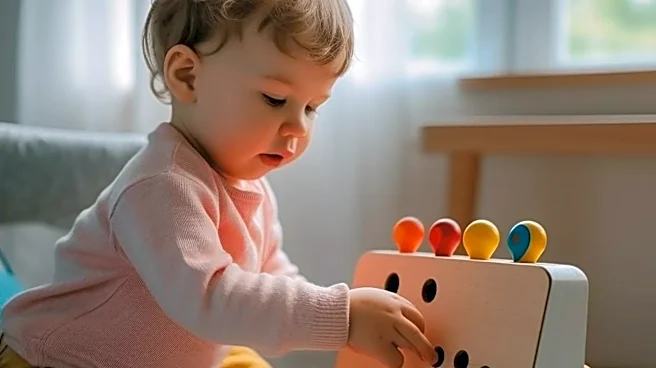
The quiet focus of a toddler trying to fit a square peg into a square hole is a sign of intense cognitive activity. Puzzles and shape sorters are powerful tools for teaching problem-solving and logical thinking. Each attempt is a small experiment, helping them understand cause and effect. This kind of play significantly enhances fine motor skills and hand-eye coordination as they manipulate pieces to fit just right. They learn to recognize shapes, colors, and patterns, which are fundamental concepts for both math and reading. Perhaps most importantly, the experience of trying, failing, and finally succeeding builds frustration tolerance and a sense of accomplishment, teaching them the valuable emotional skill of persistence.
Peekaboo and Hide-and-Seek
It may be the simplest game imaginable, but peekaboo is a profound developmental milestone. For a baby, when your face disappears behind your hands, it’s a genuine surprise when it reappears. This game is their first lesson in “object permanence”—the understanding that things and people still exist even when they can’t be seen. This concept is a building block for memory and symbolic thinking. As they grow, this evolves into hide-and-seek. The game teaches social turn-taking, stimulates visual tracking, and creates a joyful feedback loop of anticipation and relief that strengthens the parent-child bond. It’s a game that evolves with them, but its core benefit remains the same: proving that what is out of sight is not gone forever.