





Why Play Is a Toddler's 'Work'
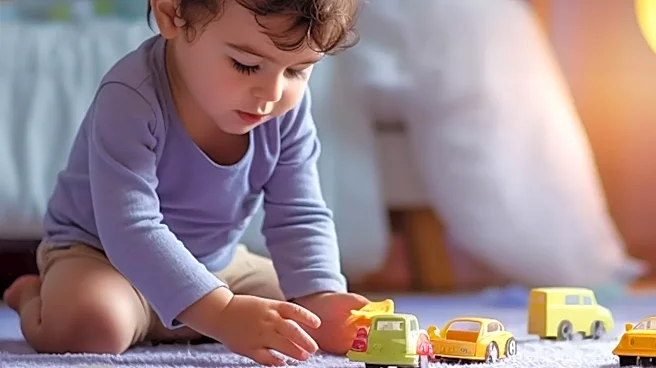
For children between the ages of one and three, play is not just for fun—it's how they learn. Every time they stack a block, chase a ball, or babble to a doll, they are building critical connections in their brain. Play is how toddlers explore how the world
works, from gravity to social turn-taking. It supports everything from physical abilities and vocabulary to problem-solving and empathy. The American Academy of Pediatrics even encourages doctors to 'prescribe' play because it is so fundamental to healthy development. When choosing a game, thinking about the skills it builds can help you find a winner.
Games for Busy Hands (Fine Motor Skills)
Fine motor skills involve the small muscles in the hands and wrists, which are essential for future tasks like writing and buttoning a shirt. Toddlers are wired to practice these skills through repetition. Look for games and activities that encourage grasping, placing, and manipulating objects. Simple, large-piece puzzles teach spatial awareness and problem-solving. Stacking blocks, whether wooden, foam, or magnetic, helps toddlers understand balance and cause and effect while strengthening their hand-eye coordination. Even peeling and placing stickers on paper is a fantastic way to practice the pincer grasp. Other great options include playing with dough, sorting beads, or placing large coins into a piggy bank.
Games for Active Bodies (Gross Motor Skills)
From their first wobbly steps to confident running and jumping, toddlers are masters of movement. Gross motor skills use the large muscles in the arms, legs, and torso. Encouraging this development doesn't require fancy equipment. Simple activities like hosting a living room 'dance party' or playing 'Red Light, Green Light' can improve balance and coordination. Balls are a toddler favorite; rolling a soft foam ball back and forth builds coordination and introduces the concept of taking turns. Setting up a simple obstacle course with pillows to crawl over or building a fort with blankets and chairs encourages climbing and exploration in a safe environment.
Games for Growing Minds (Cognitive Development)
Cognitive development is all about how children think, explore, and figure things out. For toddlers, this often involves understanding concepts like object permanence—the idea that something exists even when they can't see it. Classic games like peekaboo and simple hide-and-seek are perfect for this. Cause-and-effect toys, where pushing a button makes a sound or a light appear, are also fascinating at this age. Pretend play is another cognitive powerhouse. Giving a toddler a toy phone, a doll to 'feed', or a box to turn into a car helps them develop imagination, creativity, and language skills as they narrate their play.
Games for Making Friends (Social and Emotional Skills)
Play is a primary way toddlers learn to interact with others and understand emotions. While true cooperative play develops closer to preschool age, toddlers begin with 'parallel play,' where they play alongside their peers. This is the first step toward learning to share and negotiate. Games that involve taking turns, like rolling a ball, lay the groundwork for social skills. Pretend play, such as playing 'house' or 'doctor', allows children to role-play different scenarios, express feelings, and build empathy. Singing songs with hand motions, like 'Itsy Bitsy Spider,' helps with memory and also creates a joyful, shared social experience.
Putting It All Together: Safety and Simplicity
When selecting games, prioritize safety. Avoid toys with small parts that could be choking hazards and check for sturdy construction. For digital games, look for titles with simple, single-tap controls and no in-app purchases or data collection. Often, the most effective 'games' are the simplest. Open-ended toys like blocks, balls, and art supplies can be used in countless ways, encouraging far more creativity than a single-function electronic toy. Observe what your child is naturally drawn to. A child who loves to dump and fill containers will enjoy water play, while one who is constantly climbing will love a small slide or pillow obstacle course.