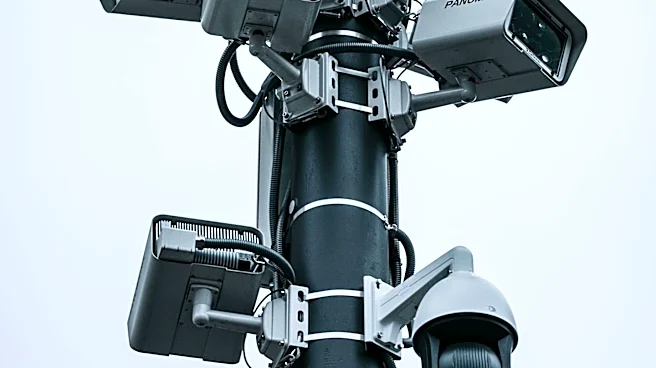










Treating AI Like a Private Diary
The conversational nature of AI chatbots makes it easy to overshare. Users often input sensitive personal data, business strategies, or confidential client information, treating the AI like a secure vault. The problem is, it's anything but. Public AI platforms
often retain your conversations to train future models. This means your proprietary code, unpublished research, or personal health details could inadvertently be exposed to other users or surface in a data breach. Think of it this way: if you wouldn't post the information on social media or in a press release, you shouldn't be entering it into a public AI tool. Once the data is entered, you lose control over it, and even deleting a chat might not remove it from the company's training datasets or backups.
Blindly Trusting Every Answer
AI models are designed to provide plausible-sounding answers, not necessarily true ones. They can produce fabricated information that appears completely authentic—a problem known as "hallucination." These systems can invent facts, cite nonexistent studies, or create misleading summaries because their goal is to predict the next logical word in a sentence, not to verify truth. This makes them unreliable for tasks that demand high accuracy, such as legal research or medical diagnosis. One study found that even specialized legal AI tools hallucinated over 17% of the time. Always treat AI-generated content as a first draft, not a final product. The responsibility for the accuracy of any work still falls on you, the user.
Ignoring That It's Trained on Biased Data
An AI model is only as good as the data it was trained on, and that data often reflects the biases of the real world. Generative AI models are trained on vast amounts of text and images from the internet, which includes societal stereotypes and historical discrimination. As a result, AI can generate content that reinforces harmful biases related to gender, race, and political affiliation. This isn't just a social issue; it has real-world consequences. For example, using a biased AI to assist in hiring decisions could perpetuate discrimination against certain groups. When using AI, it's crucial to critically evaluate its output for hidden biases and remember that the veneer of technological objectivity can hide very human flaws.
Using the Same Password Everywhere
This is a basic cybersecurity rule, but it's especially important as you sign up for various AI tools. Each new AI service you use creates another account that could be a potential target for hackers. Because AI companies are valuable targets, they are particularly vulnerable to data breaches. If you reuse the same password for your AI account that you use for your email or online banking, a breach at one company could compromise your entire digital life. It's essential to protect your AI accounts with the same diligence you'd apply to any other sensitive account: use a unique, complex password and enable multi-factor authentication (MFA) whenever it's offered.
Forgetting You’re Dealing with a Corporation
When you interact with a free AI chatbot, you aren't just having a conversation; you are providing a corporation with valuable data. Your inputs—your questions, your writing style, your ideas—are a resource used to refine their product. Chatbot interactions can be used for user profiling, behavioral pattern analysis, and tracking you across different platforms. This data collection often happens without explicit or clear consent from the user. Many organizations now have internal, private AI platforms that offer greater security. Before you integrate a public AI tool into your workflow, review its privacy policy to understand how your data is stored and used, and check if your employer offers a more secure alternative.