



How They Work: Targeted vs. Total Coverage
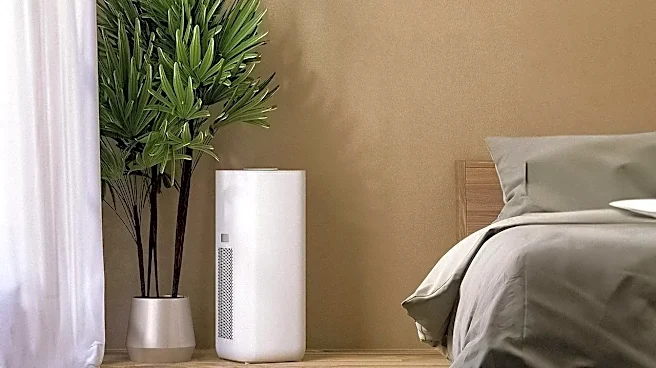
The fundamental difference lies in their scope. A portable air purifier is a standalone appliance you plug into an outlet. It draws in air from a single room, passes it through internal filters, and releases cleaner air back into that same space. This
makes it a targeted solution, perfect for improving air quality in a bedroom, nursery, or home office where you spend the most time. A whole-home air filter, by contrast, integrates directly into your home's heating, ventilation, and air conditioning (HVAC) system. Installed in the ductwork near your furnace or air handler, it cleans the air for your entire house every time the system's fan circulates, providing broad, consistent filtration to every connected room.
Effectiveness: HEPA vs. MERV Explained
Portable purifiers are often equipped with High-Efficiency Particulate Air (HEPA) filters, which are the gold standard for air cleaning. A true HEPA filter is certified to capture 99.97% of particles as small as 0.3 microns, including dust, pet dander, pollen, and smoke particulates. Whole-home systems typically use filters rated on the MERV (Minimum Efficiency Reporting Value) scale, which ranges from 1 to 16 for residential use. While a standard furnace filter might be a MERV 4, whole-home filtration systems use higher-rated filters, often in the MERV 11 to 13 range, which are highly effective at capturing dust and allergens. However, even a high-MERV filter is not equivalent to HEPA. Most residential HVAC systems cannot handle the dense nature of a true HEPA filter without significant and costly modifications.
The Bottom Line: Cost and Maintenance
Cost is a major dividing line. Portable purifiers offer a much lower entry price, with quality models ranging from $150 to $700 per unit. Outfitting a few key rooms can cost a total of $450 to $2,100 upfront. Whole-home systems are a significant investment, with professional installation costs typically ranging from a few hundred dollars for a simple filter upgrade to over $5,000 for a high-end system with HEPA filtration. The average cost for a professionally installed system is often around $2,610. For maintenance, portables require filter changes every few months to a year, depending on the model and usage. Whole-home systems also need periodic filter replacements, but often less frequently than a portable unit. However, a whole-home system's performance depends on your HVAC system running, which can increase energy costs if you run the fan continuously.
The Verdict: Which Is Right for You?
Choosing the right option depends entirely on your living situation and air quality goals.
A portable air purifier is likely your best choice if:
- You are a renter or live in a home without ductwork.
- Your air quality concerns are limited to one or two rooms, like a bedroom for an allergy sufferer.
- You want the flexibility to move your purifier or take it with you when you move.
- Your budget is a primary concern, and you prefer a lower upfront cost.
A whole-home filter is the stronger option if:
- You are a homeowner with a central HVAC system.
- You want consistent, set-it-and-forget-it air filtration throughout your entire house.
- You or a family member have allergies or asthma that are triggered in multiple areas of the home.
- You prefer a quiet, integrated solution that doesn't take up floor space.
For many, the ideal solution is a hybrid approach: a good whole-home filter (like a MERV 13) to provide a baseline of clean air, supplemented by a portable HEPA purifier in the bedroom for maximum overnight relief.