





The Undisputed Champion: Automatic Emergency Braking (AEB)
If there is one safety feature that experts agree is a must-have, it's Automatic Emergency Braking. Recommended by both the National Highway Traffic Safety Administration (NHTSA) and the Insurance Institute for Highway Safety (IIHS), AEB is your tireless
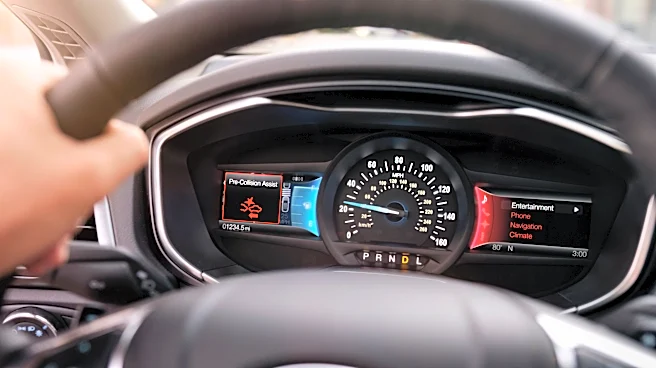
second set of eyes on the road. Using cameras and radar, the system monitors the traffic ahead. If it detects an impending forward collision and you haven't reacted in time, it will first warn you and then apply the brakes automatically. Its value in everyday stop-and-go traffic and unexpected city driving scenarios is immense, potentially turning a serious rear-end collision into a near-miss. NHTSA believes these systems represent the next wave of significant advances in vehicle safety.
The Parking Lot Hero: Blind Spot & Rear Cross-Traffic Alerts
So much of “everyday driving” happens at low speeds in chaotic environments like grocery store parking lots and school pickup lines. This is where Blind Spot Monitoring (BSM) and Rear Cross-Traffic Alert (RCTA) shine. BSM uses sensors to detect vehicles you can't see in your side mirrors, typically illuminating a warning light to prevent you from changing lanes into another car. RCTA works when you're in reverse, scanning for approaching vehicles from the side that may be outside the view of your backup camera and providing an audible warning. Since May 2018, all new passenger vehicles are required to have rearview cameras, but RCTA provides an essential extra layer of awareness when backing into a busy street or out of a tight parking space.
The Highway Helper: Lane Keeping & Centering Assist
Long commutes and highway road trips can lead to fatigue and momentary lapses in concentration. Lane Departure Warning (LDW) and Lane Keeping Assist (LKA) are designed for exactly these situations. LDW monitors lane markings and alerts you if you begin to drift unintentionally. LKA goes a step further by providing gentle steering input to guide the vehicle back toward the center of the lane. While some drivers find the constant nudges annoying, these systems are invaluable for preventing run-off-road crashes caused by distraction. More advanced Lane Centering systems actively work to keep the car centered, reducing driver fatigue on long stretches of well-marked highway.
The Commuter's Friend: Adaptive Cruise Control (ACC)
Standard cruise control is useful on an open road, but nearly useless in typical commuter traffic. Adaptive Cruise Control, however, is a game-changer. You set your desired speed and following distance, and the vehicle uses radar to automatically slow down and speed up to maintain a safe gap with the car in front of you. More advanced systems even work in stop-and-go traffic, bringing the car to a complete stop and resuming on their own, which significantly reduces the stress and fatigue of a traffic jam. It’s a feature that, once you use it, you’ll wonder how you ever commuted without it.
The Foundation: Active vs. Passive Safety
All the technologies listed above are considered “active” safety features, as they work to prevent a crash from happening in the first place. But it's crucial not to forget about “passive” safety features—the ones that protect you during a crash. This includes the high-strength steel frame of the car, designed with crumple zones to absorb impact energy, as well as the airbags and seat belts that restrain and cushion occupants. While advanced driver-assistance systems are incredibly valuable, they are a complement to, not a replacement for, a vehicle with a fundamentally strong structure and reliable passive restraints. Always look for vehicles with high crash-test ratings from the IIHS and NHTSA, which evaluate both.