




It Started With a River
The Schlitterbahn story begins not in a boardroom, but on the banks of the spring-fed Comal River in New Braunfels, Texas. In the 1960s, Bob and Billye Henry bought a small riverside resort. They noticed guests loved tubing on the river, and an idea sparked:
what if they could replicate that natural, meandering experience in a controlled park setting? While other parks were built as attractions that later added water, Schlitterbahn was conceived with the river as its soul. The original section still uses water from the Comal, filtering it for the rides and returning it to the river, creating an environment shaded by century-old cypress trees that feels worlds away from a typical theme park.
A DIY German Heritage
When the park first opened in 1979, the Henry family paid homage to the area's strong German roots. They settled on the name "Schlitterbahn," a made-up German word combining "Schlitter" (slippery) and "Bahn" (road). The park's iconic first tower was even modeled after the Bergfried Guard Tower at Solms Castle in Braunfels, Germany. This wasn't just branding; it reflected a hands-on, family-driven ethos. The Henrys, along with their children, were deeply involved in the design and construction, giving the park a unique, almost handcrafted feel that contrasted sharply with the corporate parks popping up elsewhere.
The Invention That Changed Everything
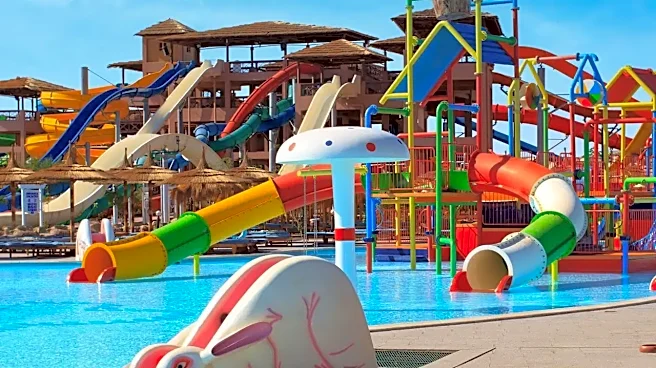
The single greatest innovation solidifying Schlitterbahn’s unique status is the uphill water coaster. Invented by Jeff Henry in the 1990s, the Master Blaster uses powerful jets of water to propel riders up hills, not just down them. This was a revolutionary concept. Before the Master Blaster, water rides were dictated entirely by gravity. You climbed a tower, slid down, got out, and climbed again. The uphill coaster allowed for the creation of sprawling, interconnected river systems where you rarely had to leave your tube. This technology is the engine behind Schlitterbahn’s signature experience: the long, continuous journey.
Welcome to 'Transportainment'
The uphill water coaster gave birth to a philosophy Schlitterbahn calls "Transportainment"—a blend of transportation and entertainment. At Schlitterbahn, the rivers aren't just lazy rivers; they are the park's circulatory system. Rides flow into rivers, which lead to other rides, creating massive, hours-long loops. The goal was to duplicate the social, relaxing feel of floating a real river with friends. This fundamentally changes the park's pacing. Instead of a frantic rush between attractions, the experience becomes about the journey itself, a continuous float punctuated by moments of thrill. It's a social, communal experience that other parks, with their start-and-stop ride structures, struggle to replicate.
A Culture of Coolers and Community
Perhaps nothing illustrates the Schlitterbahn difference more than its famously permissive policy on coolers. Guests are welcome to bring their own picnics and drinks (no glass or alcohol), a practice unheard of at most major theme parks. This isn't just a budget-friendly perk; it's a core part of the park's identity. By encouraging families to set up a home base at a picnic table for the day, it reinforces the relaxed, community-first atmosphere that started on the Comal River. Combined with free parking and free use of inner tubes, it fostered a level of goodwill and loyalty that has been key to its long-standing reputation as the “World’s Best Waterpark,” an award it has won for decades.