







Your Daily Commute, Curated by AI
When you open a maps app like Google Maps or Waze, you're tapping into a powerful AI system. Its most obvious job is finding the quickest route, but its intelligence runs much deeper. The app isn't just looking at the current state of traffic; it's analyzing
vast amounts of historical data to predict what traffic will look like in 10, 20, or 50 minutes. By combining this historical knowledge with real-time, anonymous data from other drivers, the AI model can forecast a jam before it even fully forms and proactively reroute you. This predictive power comes from machine learning. The system constantly learns from new data, recognizing patterns like how a specific highway behaves on a Friday afternoon versus a Monday morning. It also integrates user-reported incidents, such as accidents or road closures, to make its decisions even smarter. The AI can even analyze satellite and Street View imagery to identify new roads or changes in traffic patterns, ensuring the map itself is constantly evolving.
The Recommendation Engine That Knows You
Ever wonder how Netflix seems to know you want to watch a specific documentary or how Spotify crafts the perfect Discover Weekly playlist? That's the work of a sophisticated recommendation engine, one of the most common yet powerful forms of everyday AI. These systems primarily use a method called collaborative filtering. In simple terms, the AI analyzes your behavior—what you've watched, liked, or skipped—and compares it to the behavior of millions of other users. It then identifies a group of "taste twins" who have similar preferences. The system then recommends items that your taste twins enjoyed but that you haven't seen yet. Another method is content-based filtering, where the AI analyzes the attributes of the content itself. For a movie, this could be its genre, director, actors, or even thematic elements. If you watch a lot of sci-fi films starring a particular actor, the AI will recommend other films with those same attributes. Most advanced platforms like Netflix use a hybrid model, combining both approaches to make suggestions that feel eerily personal and keep you engaged.
The Smart Device That Understands You
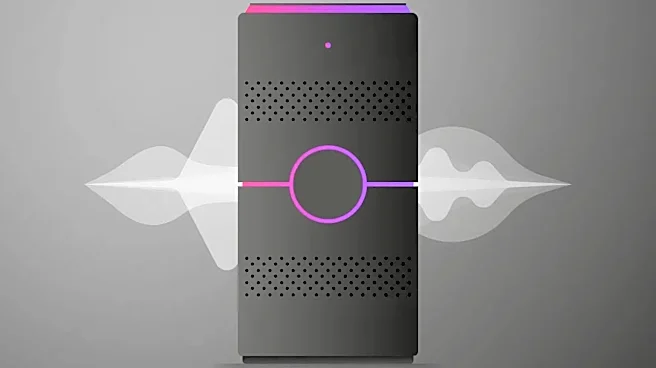
When you say, "Alexa, what's the weather?" you are interacting with a complex AI system designed to understand human language. This field of AI is called Natural Language Processing (NLP). First, the device uses a "wake word" to start recording. That recording is sent to the cloud, where powerful servers convert your speech into text using automatic speech recognition (ASR). Next, the NLP models get to work, parsing the text to figure out your intent. It understands that "what's the weather" is a request for the forecast, not a philosophical question. It can even use context; asking "what about tomorrow?" will get you the next day's forecast without needing to specify "weather" again. Finally, after retrieving the information, the AI uses natural language generation to formulate a human-like verbal response, which is then sent back to your device's speaker. This entire process happens in just a couple of seconds, creating the illusion of a seamless conversation. The AI constantly learns from every interaction, improving its ability to understand different accents, phrasings, and commands.