





Active vs. Passive: The Two Types of Safety
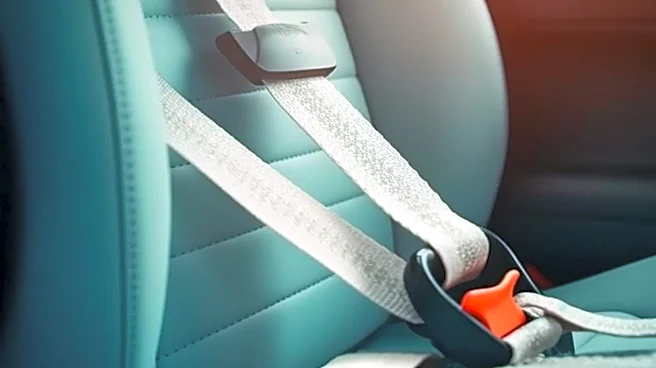
To understand modern car safety, it helps to know the two basic categories. Passive safety features are the ones that protect you during a crash. Think of airbags, seatbelts, and the car's structural crumple zones. They remain inactive until an impact
occurs. Active safety features, on the other hand, work to prevent a crash from happening in the first place. These are systems like automatic braking and lane warnings that are always monitoring the driving environment to help you avoid danger. Modern cars use a combination of both to create a comprehensive safety net.
Automatic Emergency Braking (AEB)
If there's one feature to know, it's this one. Automatic Emergency Braking, or AEB, uses forward-facing sensors like cameras and radar to monitor the road ahead. If the system detects a potential collision with a vehicle, pedestrian, or cyclist and you don't react in time, it will first issue a warning. If you still don't brake, the system can apply the brakes automatically to either prevent the crash entirely or reduce its severity. While not a guarantee against all collisions, it's a critical technology that acts as an extra set of eyes on the road.
Blind-Spot Monitoring and Rear Cross-Traffic Alert
These two systems work together to cover the areas that are hardest to see. Blind-Spot Monitoring uses radar sensors in the rear bumper to detect vehicles you can't see in your mirrors. When a car enters your blind spot, a light usually illuminates on or near your side-view mirror. If you use your turn signal to change lanes, the system will typically flash the light and sound an audible alert. Rear Cross-Traffic Alert uses the same sensors but works when you're in reverse. It's designed to prevent you from backing out into the path of an oncoming car in a parking lot or driveway. If it detects a vehicle approaching from the side, it will warn you with lights and a tone.
Lane Departure Warning vs. Lane-Keeping Assist
These related features are designed to prevent you from unintentionally drifting out of your lane. A Lane Departure Warning (LDW) system uses a camera to watch the painted lane markers. If you start to drift over a line without your turn signal on, it will give you a visual, audible, or vibrating alert (like a shaking steering wheel). It warns you, but it doesn't take action. Lane-Keeping Assist (LKA) is the next step. It's a more active system that will provide a gentle steering correction to nudge you back toward the center of your lane if you start to drift. Think of LDW as a warning bell and LKA as a co-pilot offering a gentle hand on the wheel.
Adaptive Cruise Control (ACC)
This is a significant upgrade from traditional cruise control. While regular cruise control maintains a set speed, Adaptive Cruise Control (ACC) also maintains a set following distance from the vehicle ahead. Using radar or cameras, ACC will automatically slow your car down as traffic slows, and then accelerate back to your set speed once the way is clear. More advanced versions can even work in stop-and-go traffic, bringing the car to a complete stop and starting again on its own. It's a feature that dramatically reduces driver fatigue on long highway trips and in heavy congestion.
The Classics That Still Count
Even with all this new technology, the foundational safety features are as important as ever. Airbags, modern three-point seatbelts, and anti-lock brakes (ABS) are your first line of defense in a collision. Electronic Stability Control (ESC) is another crucial feature that has been standard for years; it helps prevent skids and loss of control by automatically braking individual wheels. These passive and active systems work in concert with the newer driver-assistance features to make today's cars safer than ever.