







Prioritize Upper-Arm Cuffs for Accuracy
When you start shopping, you’ll see two main styles: monitors with cuffs that go on your upper arm and smaller ones that wrap around your wrist. For the most dependable readings, major health organizations like the American Heart Association (AHA) strongly
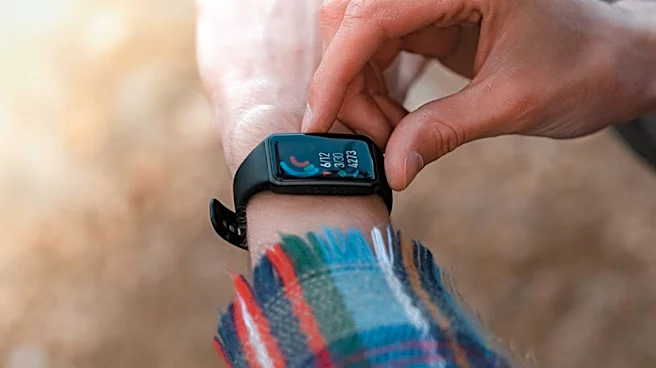
recommend an automatic, upper-arm cuff monitor. The brachial artery in your upper arm is larger and provides a more direct and consistent measurement of your blood pressure. Wrist monitors are more sensitive to your body's position. To get an accurate reading, your wrist and arm must be perfectly positioned at heart level, which can be difficult to do consistently. While wrist models are an option for those who cannot use an upper-arm cuff due to arm size or other medical reasons, they are generally considered less reliable for routine home use. Finger monitors are not recommended as they are even less accurate.
Insist on Clinical Validation
This might be the single most important factor. Look for a monitor that has been “clinically validated for accuracy.” This isn’t just marketing jargon; it means the device has been independently tested against medical-grade equipment to ensure its readings are precise. The American Medical Association (AMA) supports a public list of validated devices, often called the US Blood Pressure Validated Device Listing (VDL). Checking this list is a great way to ensure the model you're considering has met rigorous standards. While a device not being on the list doesn't automatically mean it's inaccurate, choosing one that is provides an extra layer of confidence that you and your doctor can trust the numbers. These validations often test devices across different patient groups, including those who are pregnant or have diabetes, to ensure accuracy in various conditions.
Get the Right Cuff Size
An ill-fitting cuff can throw off your readings significantly—by as much as 30 mmHg. A cuff that's too small may give a reading that is artificially high, while one that is too large may result in a reading that's too low. Before you buy, use a flexible tape measure to find the circumference of your bare mid-bicep. Compare this measurement to the sizing guide on the monitor's packaging. Most monitors come with a standard adult cuff, but many people require a small or large size, which sometimes must be purchased separately. A properly fitted cuff should be snug but not tight; you should be able to slide two fingers underneath it. The inflatable bladder inside the cuff should encircle about 80% of your arm.
Consider Key Features and Ease of Use
Beyond the basics, think about what features will make monitoring easiest for you. The display should be large and easy to read. If more than one person in your household will be using the monitor, look for a model with memory storage for at least two users. Many devices also include an irregular heartbeat detector, which can flag potential arrhythmias for discussion with your doctor. Another important consideration is ease of use. A simple, one-button operation can be ideal for many users, especially older adults. While some modern monitors offer Bluetooth connectivity to sync readings with a smartphone app, this isn't a necessity for everyone. It can be helpful for tracking trends over time, but a simple logbook works just as well.
Bring Your New Monitor to Your Doctor
Once you've made your choice, the final step is to have it checked for accuracy. Bring your new home monitor to your next doctor's appointment. You can take a reading with your device and compare it to the one taken by your healthcare professional with their office equipment. Your doctor’s office can confirm that your machine's readings are within an acceptable range, typically within 10 points. This quick check provides peace of mind and confirms that your technique is correct. It also helps your doctor trust the readings you provide from home, which are crucial for managing your treatment plan effectively. Most home monitors are reliable for about two to three years, after which it's a good idea to re-validate them at your provider's office.