



Why Ratios Are the Real Power Play
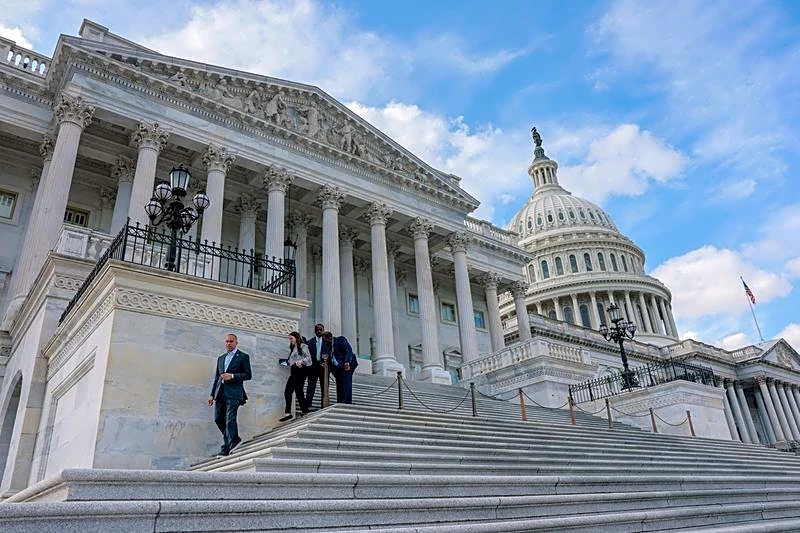
In Washington, D.C., committees are everything. They are the gatekeepers that decide which bills get a hearing, which investigations move forward, and which presidential nominations advance. The party that holds the majority on a committee can fast-track its priorities or kill the other side's proposals without a public floor vote. This power isn't just about having a chairperson with a gavel; it's about simple math. A committee's 'ratio' is the proportional split of members from the majority and minority parties. If a party holds more seats on a panel, it has the votes to control the agenda, amend legislation, and ultimately determine what becomes law. This behind-the-scenes negotiation over committee seats is one of the first and most consequential
battles of any new Congress.
The House: A Game of Majoritarian Rule
In the House of Representatives, the principle is straightforward: the majority rules. The party that controls the chamber holds the power to set the committee ratios. While there are often discussions between the Speaker of the House and the Minority Leader, the majority party is not required to give the minority a proportional number of seats. Historically, the majority party gives itself a slightly larger share of committee seats than its overall share in the House to ensure it maintains firm control. For instance, if a party holds 52% of the seats in the House, they might give themselves 54% or 55% of the seats on most committees. On especially powerful panels like the Rules Committee—which sets the terms for floor debate—the majority often gives itself a supermajority, such as a two-to-one advantage, to guarantee absolute control over the legislative process. These ratios are formalized in a simple resolution at the start of a new Congress.
The Senate: An Arena of Negotiation
The Senate operates differently. While the majority party still holds the advantage, its rules and traditions foster more negotiation and compromise. Unlike the House, where the majority can largely impose its will, Senate leaders from both parties must typically negotiate and agree on committee sizes and ratios. These agreements are then passed via a resolution to organize the Senate for the new Congress. This process is necessary because the Senate is a continuous body, and its rules can empower the minority to create procedural hurdles. The final ratios usually reflect the overall party balance in the chamber but are the product of bipartisan discussion. The goal for the majority is to secure a 'working majority' on key committees, but the minority has more leverage to ensure the ratios aren't excessively tilted.
When the Margins Are Razor-Thin
The real drama happens when the majority's control of a chamber is slim. A narrow margin shrinks the majority's leverage. In the House, a small majority might mean committee ratios that are much closer to the chamber's overall split, giving the minority party a stronger voice and a better chance to influence legislation at the committee stage. In the Senate, a 50-50 split, as has happened in the past, forces the parties into a power-sharing agreement. In this scenario, committees are often evenly divided between both parties. To prevent legislative gridlock, where tied votes would kill every bill, the organizing resolution may include special rules, such as allowing a measure to advance to the floor if a committee vote is tied. These rare situations fundamentally alter the balance of power, forcing collaboration and giving senators from the minority party significant influence over the agenda.