


U.S. Senate
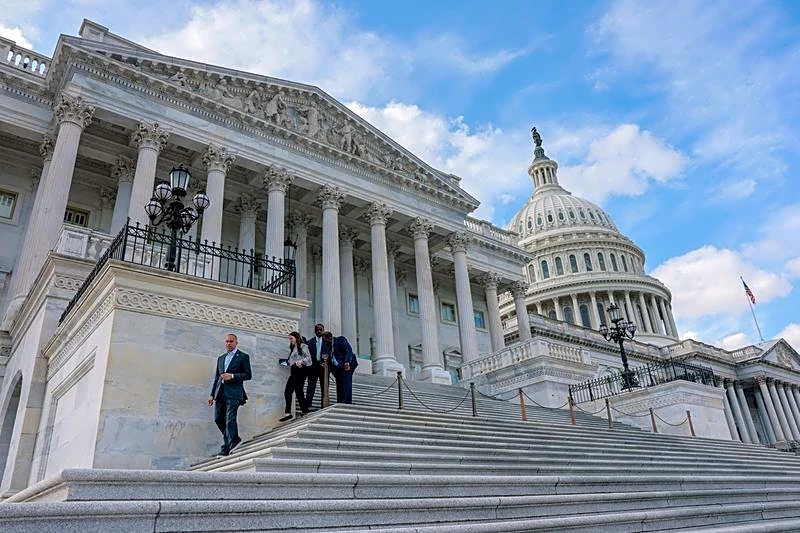
One of Montana's two seats in the United States Senate is up for a statewide vote in 2026. Senators serve six-year terms and are part of the upper chamber of Congress, which holds immense power over federal law, judicial appointments, and international treaties. Along with the state's other senator, this official represents all Montanans in Washington, D.C., influencing national policy on everything from agriculture and energy to healthcare and the economy. The incumbent, Republican Steve Daines, is not seeking a third term, making this an open-seat race.
U.S. House of Representatives
Montanans will elect representatives for both of the state's congressional districts for two-year terms. The U.S. House of Representatives is the lower chamber of Congress, where all federal
spending bills must originate. Representatives are responsible for drafting and voting on federal laws, serving on committees that oversee specific areas of policy, and representing the interests of their specific district. District 1 covers western Montana, including cities like Missoula and Bozeman, while District 2 encompasses the eastern part of the state, including Billings and Great Falls.
Montana State Auditor
Despite the title, the Montana State Auditor does not conduct traditional financial audits of state agencies. Instead, this statewide elected official serves a four-year term as the Commissioner of Securities and Insurance. The auditor's primary role is to regulate Montana's insurance and securities industries, which includes licensing companies, investigating fraud, and protecting consumers from illegal or unfair financial practices. This office has a direct impact on the insurance rates and investment products available to Montanans. The previous election for this office was in 2024, but it is listed on some 2026 election guides, making it important for voters to verify its presence on their specific ballot.
Superintendent of Public Instruction
The Superintendent of Public Instruction is a statewide executive elected to a four-year term, serving as the head of the Office of Public Instruction (OPI). This official has general supervision over Montana's K-12 public schools. Key responsibilities include distributing state and federal funding to school districts, licensing educators, overseeing statewide student assessments, and setting school accreditation standards. The Superintendent also serves on the Montana Board of Land Commissioners, which manages state trust lands to generate revenue for public schools.
Clerk of the Supreme Court
Elected statewide to a six-year term, the Clerk of the Montana Supreme Court is a crucial administrative officer for the state's highest court. This office is not a judicial role; rather, the Clerk is responsible for managing the flow of cases that come before the Supreme Court. Duties include receiving and processing all appellate paperwork, maintaining official court records and the seal, managing the court's docket, and handling the licensing process for attorneys practicing in Montana. The current Clerk was reelected in November 2024, so this office is not expected to be on the 2026 ballot.
Public Service Commission (PSC)
Two seats on the five-member Public Service Commission are up for election in 2026 for four-year terms: District 1 and District 5. The PSC is a powerful board that regulates investor-owned utility companies in Montana. Its decisions directly affect the rates that consumers pay for electricity, natural gas, private water services, and some telephone services. Commissioners ensure that regulated companies provide reliable service at reasonable rates. The PSC's authority also extends to regulating certain motor carriers, such as garbage trucks and taxis operating in multiple communities.
Montana Supreme Court Justice
One seat on the seven-member Montana Supreme Court will be on the 2026 ballot for an eight-year term. Supreme Court justices are elected in nonpartisan races. They serve as the final arbiters of state law, hearing appeals from lower district courts on civil and criminal cases. Their rulings interpret the Montana Constitution and state statutes, setting legal precedents that affect all aspects of life in Montana. The incumbent justice holding the seat is not running for re-election, guaranteeing a new face will join the court.
State Legislature
The entire Montana House of Representatives—100 members—is up for election for two-year terms. Additionally, 25 of the 50 seats in the Montana Senate are on the ballot for four-year terms. Together, these lawmakers are responsible for creating, debating, and voting on state laws and passing a biennial state budget. They decide state-level policy on issues ranging from taxes and education funding to natural resource management and criminal justice, directly shaping the daily lives of citizens across the state.