
The Magic Number: Five
In 2026, Oklahoma is represented by five members in the U.S. House of Representatives, one for each of its five congressional districts. This number isn't arbitrary; it's determined by a process called
apportionment, which happens after every U.S. Census, conducted once a decade. The 435 seats in the House are divided among the 50 states based on their population. Following the 2020 Census, Oklahoma's population was sufficient to maintain the five seats it was allotted after the 2010 Census, meaning it neither gained nor lost a district. These district boundaries were redrawn by the state legislature in a 2021 special session and signed into law, taking effect for the 2022 elections and remaining in place through 2026.
How The District Lines are Drawn
After a state learns how many congressional seats it gets, the next step is redistricting—the often contentious process of drawing the map. In Oklahoma, the state legislature is responsible for this task. The goal is to create districts with nearly equal populations. However, this process is famously political. The party in power has the ability to draw lines that may favor its candidates, a practice known as gerrymandering. Following the 2020 census, the Republican-controlled legislature passed the new map. Critics pointed to decisions like splitting Oklahoma County, which is politically competitive, into three different districts as a move to dilute the voting power of Democrats and secure Republican-leaning seats.
A Snapshot of Oklahoma’s Five Districts
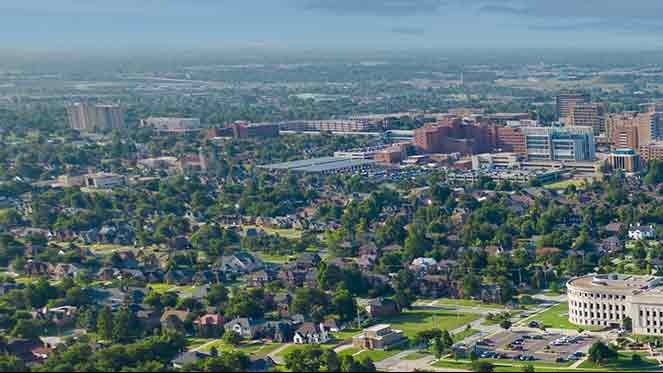
Each of Oklahoma's five districts has a distinct identity, representing different geographic and demographic slices of the state. As of late 2026, all five seats are held by Republicans. - District 1, centered on Tulsa, is a hub of commerce and culture in northeastern Oklahoma. - District 2 covers the eastern part of the state, often called 'Green Country', known for its numerous lakes and rural communities. - District 3 is a vast, largely rural district that stretches across western Oklahoma, including the Panhandle and agricultural heartlands. - District 4 encompasses south-central Oklahoma, including some suburbs of Oklahoma City and communities like Norman. - District 5 is an urban and suburban district that includes the core of Oklahoma City.
A History of Shifting Representation
Oklahoma's congressional power has fluctuated throughout its history. Upon statehood in 1907, it was granted five seats. The state's delegation grew thanks to an oil-fueled population boom in the early 20th century, peaking at nine representatives (eight district-based and one at-large) in the 1930s. However, the Dust Bowl and subsequent population shifts led to a gradual decline in representation. The state lost its ninth seat in the 1940s, dropped to six seats in the 1950s, and finally settled at five seats after the 2000 Census—the same number it holds today. This history reflects the state's changing demographics and its evolving role on the national stage.