

The Simple Answer: Eight Districts
First, the straightforward part. Missouri is divided into eight congressional districts, each responsible for electing one representative to the U.S. House. This number has been stable for a while; following the 2020 U.S. Census, Missouri was apportioned the same eight seats it had after the 2010 census. While states with faster-growing populations gained seats and those with shrinking or slower-growing populations lost them, Missouri held steady. So, for over a decade, the state's total voice in the House of Representatives has been a delegation of eight members. The state's representation is currently composed of six Republicans and two Democrats.
The Post-Census Shuffle: A Contentious Remap
The complicated part is the “whether they changed” question. After every census, states redraw
their district lines to ensure each one has roughly the same number of people. This process, called redistricting, is inherently political. In Missouri, the Republican-led state legislature is responsible for drawing the congressional map. Following the 2020 Census, this process resulted in a new map signed into law in May 2022. That map was designed to maintain the existing 6-2 Republican majority and was used for the 2022 and 2024 elections. It made some boundary adjustments, including splitting Boone County and shifting lines in other large counties, but it wasn't expected to alter the partisan balance of the delegation.
The Mid-Decade Gambit: A Fight for a Seventh Seat
The real drama began in 2025. Spurred by a push to gain an advantage in the 2026 midterm elections, Missouri's Republican leadership undertook a rare mid-decade redistricting effort. In a special session, the legislature passed a new, more aggressively partisan map. This 2025 map was specifically designed to help Republicans pick up a seventh seat by dismantling the Kansas City-based 5th District, held by Democratic Rep. Emanuel Cleaver, and blending its urban and suburban voters into more conservative rural areas. Governor Mike Kehoe signed this new map into law on September 28, 2025, setting the stage for a major legal and political clash.
The Courts Step In: A Map Invalidated
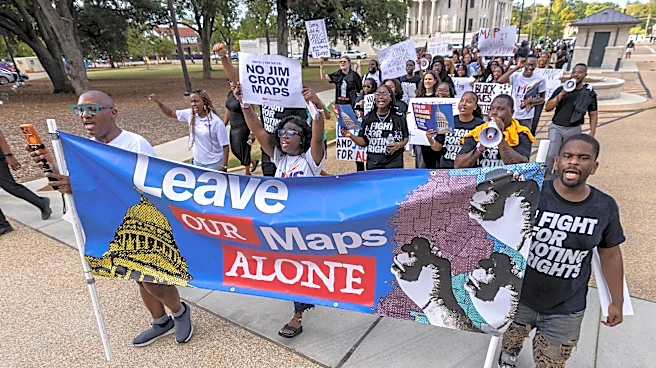
The 2025 map never had a chance to settle. A citizens' group called People Not Politicians quickly organized a veto referendum, gathering over 300,000 signatures to put the new map up for a statewide vote. This triggered a chaotic series of court battles that went all the way to the U.S. Supreme Court. State officials and map opponents fought over whether the referendum was valid and which map should be used for the fast-approaching 2026 elections. After several back-and-forth rulings between state and federal courts, the U.S. Supreme Court ultimately intervened. On September 25, 2026, it blocked the use of the new 2025 map. This landmark decision affirmed a Missouri Supreme Court ruling that the map could not take effect unless approved by voters in the referendum.
What It Means for 2026 and Beyond
The final ruling from the nation's highest court means that, for the November 2026 elections, Missouri must use the 2022 map—the less aggressive one that maintains a likely 6-2 partisan split. The confusion was so significant that absentee voting had already begun using the 2022 district lines even as the legal battle raged. The fate of the more partisan 2025 map now rests with Missouri voters, who will decide in a November 2026 referendum (Proposition A) whether it should be adopted for future elections. This entire saga serves as a powerful illustration of how the seemingly bureaucratic process of drawing lines on a map is, in reality, a high-stakes battle for political power and representation.