



The Short Answer: An Open Primary With a Twist
To get right to the point: North Dakota has an open primary system for its state and congressional elections. In the simplest terms, an open primary means that any eligible voter can participate, regardless of their political party affiliation. You don't have to be a registered Democrat to vote in the Democratic primary or a registered Republican to vote in theirs. This approach stands in contrast to closed primary states, where voting in a party's primary is restricted to voters officially registered with that party. But North Dakota's system goes a step further, thanks to a defining feature of its entire electoral process. All candidates appear on a single ballot, but there's a catch: you can only vote for candidates from one party. If you try
to vote for a Democrat for one office and a Republican for another, your partisan ballot will be rejected.
The 'No Registration' Wrinkle
The reason North Dakota’s open primary is so distinct is because it's the only state in the entire country that does not have voter registration. This isn't a recent development; it's a core part of the state's civic identity. Since there's no official list of registered Democrats, Republicans, or Independents, a closed primary system would be impossible to administer. Instead of registering beforehand, you simply prove your eligibility on Election Day. To vote, you must be a U.S. citizen, at least 18 years old, and have been a resident of your precinct for at least 30 days prior to the election. At the polling place, you'll be required to present a valid form of identification, such as a North Dakota driver's license or a state-issued non-driver ID, that includes your name, date of birth, and current residential address.
How Voting Actually Works in a Primary
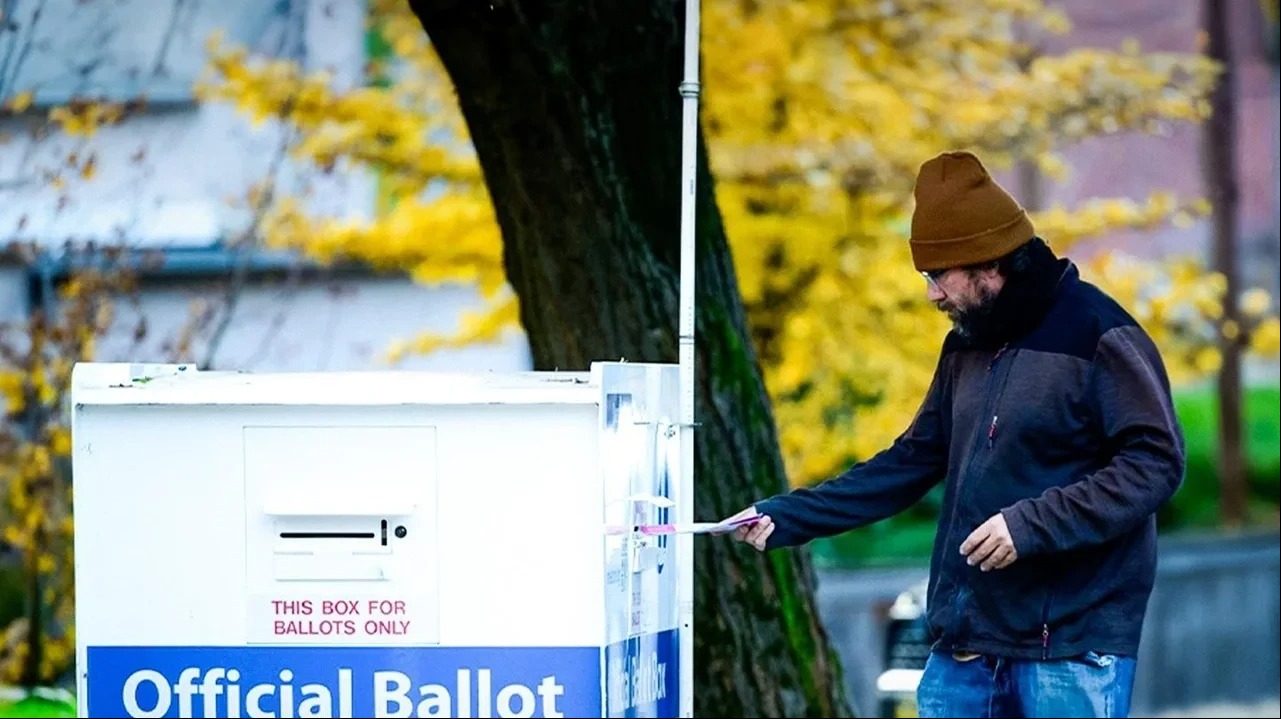
So, what does this look like in practice? An eligible voter arrives at their local polling place and presents their ID. Once their eligibility is confirmed, they receive a ballot. That ballot lists candidates for the various party primaries—typically in separate columns for the Democratic-NPL Party and the Republican Party. The voter then takes their ballot to a booth and makes their selections, but they must stick to just one party's column for all partisan races. For example, a voter can choose to vote for candidates in the Republican primary for governor, senator, and state representative. They cannot, however, vote for a Republican for governor and a Democrat for senator. Should a voter make that error, known as a 'crossover vote', the ballot tabulator will alert them, and they have the option to receive a new ballot or cast the faulty one, knowing the partisan votes won't be counted. Non-partisan races, like those for judges or city officials, are typically on the back of the ballot and are unaffected by this rule.
A Legacy of Populism and Independence
North Dakota's unique system is rooted in its populist history and a deep-seated independent streak. At the turn of the 20th century, the state's politics were dominated by out-of-state corporate interests and powerful political bosses. In response, a powerful agrarian movement called the Non-Partisan League (NPL) emerged. The NPL wasn't a party itself but a political organization that filed its candidates on the Republican primary ballot to challenge the established order. This created a system where the primary election, not party conventions, became the most important battleground for control of the state. This history fostered a political culture that prioritizes direct access for voters over strict party loyalty, an ideal that the open primary and no-registration system continue to reflect to this day.
Pros and Cons of the Peace Garden State's Approach
The main argument in favor of North Dakota's system is its incredible accessibility. With no registration deadlines to worry about, the barrier to voting is significantly lower than in any other state. Proponents argue this encourages higher participation and gives voters maximum flexibility. On the other hand, critics of open primaries sometimes worry about 'strategic voting' or 'party raiding,' where voters of one party cross over to influence the other party's primary, perhaps by voting for a candidate they perceive as weaker. However, North Dakota's rule forcing voters to stick to one party per ballot mitigates this to some extent. The system remains a fascinating American experiment, prioritizing ease of access and voter freedom in a way that sets it apart from all 49 other states.