



The Building Block of Your Vote
A precinct is, at its core, a small, defined geographic area created for the purpose of administering elections. Think of it as your specific voting neighborhood. All the registered voters who live within a precinct's boundaries are assigned to the same polling place to cast their ballots in person. In New Jersey, you will often hear this unit referred to as an 'election district', but the concept is the same. The primary purpose of this system is to keep voting orderly and manageable. By dividing a town or city into smaller pieces, election officials can avoid impossibly long lines, ensure there are enough ballots and voting machines for a known number of voters, and count votes efficiently at a local level before they are aggregated for county
and statewide totals.
From Local Precincts to Larger Districts
While a precinct determines where you vote, it also serves as a foundational piece for building larger political territories. These tiny geographic units are the building blocks that state officials use to draw the lines for bigger districts where you elect representatives. For instance, New Jersey is divided into 40 legislative districts, with each district electing one State Senator and two members of the General Assembly. These districts are supposed to contain roughly the same number of people to uphold the principle of 'one person, one vote'. Similarly, the state is divided into 12 congressional districts to elect members to the U.S. House of Representatives. Each of these larger districts is composed of many smaller precincts pieced together.
So, How Many Precincts Are There?
This is where it gets tricky. While there is a fixed number of legislative (40) and congressional (12) districts, the exact number of precincts, or election districts, in New Jersey is not a static figure that's widely publicized. The number is in the thousands, but it can change. Local election boards can adjust or redraw precinct lines, especially after the major redistricting process that occurs every ten years following the U.S. Census. When new congressional or legislative district lines cut through existing precincts, those precincts must often be split or redrawn to ensure a voter is in the correct jurisdictions for all of their representation. Because they are administrative units that can be modified for logistical reasons, the state and counties focus public attention on the larger, more stable districts they form.
What Your Precinct Means for You
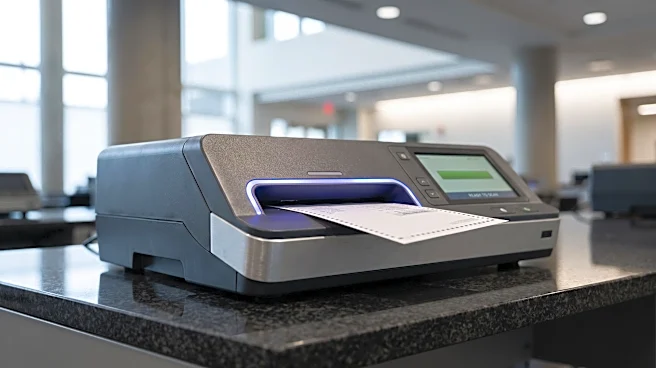
On a practical level, your precinct matters most for in-person voting. Your specific precinct assignment is what determines which school, firehouse, or community center you go to on Election Day. It also defines the exact ballot you receive, ensuring you are voting on the correct local measures and for the candidates running to represent your specific area, from town council to Congress. Beyond voting logistics, precincts are the ground floor of grassroots politics. Political parties are often structured around these small units, with local party committee members elected from and for a specific election district. These are the people who organize get-out-the-vote efforts and represent their neighborhood's voice within the party structure.