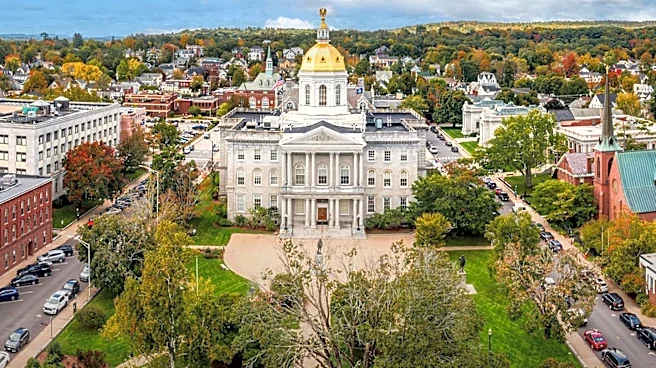




For a small state, New Hampshire casts a long shadow in American politics. To understand its outsized influence, you need to know its political geography. It all starts with a simple question: how is the Granite State carved up for Congress?
The Simple Answer Is Two
New Hampshire has two congressional districts. That's it. The state's population, as counted by the 2020 U.S. Census, entitled it to the same number of seats in the House of Representatives it has held for decades. Historically, the state had as many as four districts in the 1840s and an at-large district before that, but for modern purposes, the answer is consistently two. These districts, officially known as New Hampshire's 1st and 2nd Congressional Districts, divide the state into two similarly populated
halves, with each containing just under 700,000 residents. While the number itself is straightforward, the lines that define these two territories—and the recent battle over them—are far more complex.
The Map That Almost Changed
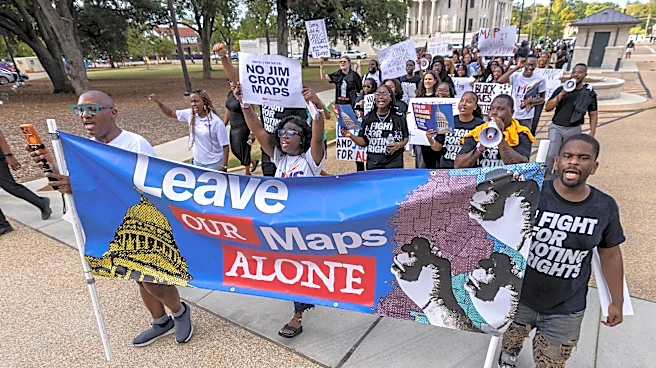
After the 2020 Census, New Hampshire, like every other state, had to redraw its district maps. What followed was a political stalemate. The Republican-controlled state legislature passed multiple map proposals in 2022. These maps would have significantly altered the districts, with one plan making the 1st District more Republican-friendly and the 2nd District more Democratic. Then-Governor Chris Sununu, a Republican, broke with his party and vetoed the maps, arguing they created districts that were not competitive. With the legislature and the governor at an impasse, the New Hampshire Supreme Court took over. The court appointed a special master who ultimately proposed a "least-change" map, which minimally adjusted the existing lines to balance population shifts. This is the map currently in use, meaning the districts did not fundamentally change their political character despite a dramatic, months-long political fight.
Meet NH-01: The Perpetual Battleground
New Hampshire's 1st District is one of the most famous swing districts in the entire country. Covering the eastern part of the state, including its largest city, Manchester, the Seacoast, and the Lakes Region, NH-01 is a political chameleon. For years, it had a reputation for ousting its incumbent representative in nearly every election cycle. That streak was broken in 2020, but the district remains fiercely competitive. It's a place where elections are won on the margins, attracting immense national attention and campaign spending. Its voters are known for being independent-minded, often splitting tickets. The district's economy is a mix of manufacturing, healthcare, and education, with the University of New Hampshire located within its bounds. Its bellwether status makes it a crucial indicator of the national political mood.
And NH-02: The Blue-Leaning Other Half
The 2nd District covers the western and northern parts of the state, including the state capital, Concord, and the city of Nashua. While it also has a rural-suburban mix, NH-02 has a more reliably Democratic lean compared to its volatile sibling. Home to Dartmouth College, the district's politics are often influenced by its academic and professional communities. Though considered safer for Democrats in recent cycles, it is by no means a lock. Historically, the district had strong Republican roots, and like all of New Hampshire, its voters value pragmatism and can be quick to cross party lines. It is slightly more rural than the 1st District and includes large employers like Dartmouth-Hickcock Medical Center and BAE Systems. While NH-01 gets the headlines for being a toss-up, NH-02 is the state's Democratic anchor.
Why This All Matters for the U.S.
The story of New Hampshire's two congressional districts is a microcosm of modern American politics. You have the drama of redistricting, where partisan goals clashed with a desire for competitive fairness, ultimately requiring court intervention. You also have two districts that perfectly illustrate the nation's political divide. One is a pure, 50/50 swing district where a few thousand independent voters decide the outcome, while the other is a more stable, left-leaning district that still retains a strong independent streak. Because the state's congressional delegation is so small, every race is a high-stakes affair that can influence the balance of power in the U.S. House of Representatives. The Granite State's districts are not just lines on a map; they are political battlegrounds that help tell the story of where the country is and where it might be heading.