




The New Voice: A Citizen Advisory Committee
The biggest change to New Mexico’s process came in 2021 with the creation of the Citizen Redistricting Committee (CRC). This seven-member body was designed to be the public’s entry point into the once-opaque world of map-drawing. Its members are appointed by legislative leaders from both parties and the State Ethics Commission, with rules to ensure a degree of political balance. The CRC’s primary job is to travel the state, hold public hearings, and listen to feedback from everyday New Mexicans about what defines their communities. Based on this input and strict legal criteria, the committee is tasked with drafting three different sets of proposed maps for the U.S. House, the State Senate, and the State House.
The Deciding Power: The Legislature and Governor
Here’s the crucial detail: the Citizen
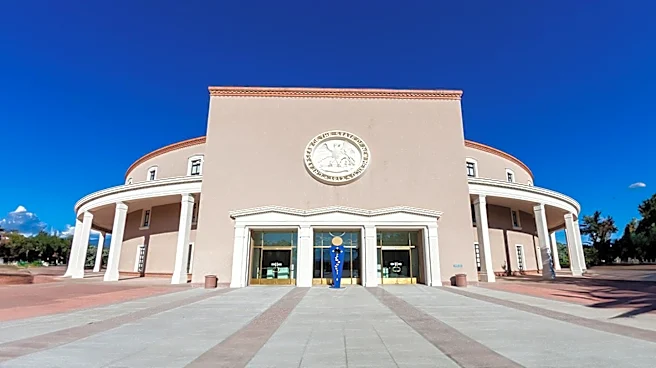
Redistricting Committee is advisory. It has the power to suggest, but not to decide. After the CRC finalizes its proposals, the maps are handed over to the state legislature. Lawmakers can adopt one of the CRC's maps, amend them, or discard them entirely and draw their own from scratch. This maintains the traditional power structure where the party in control of the legislature ultimately drives the outcome. Once the legislature passes a map bill, it goes to the governor’s desk for a signature or a veto. In essence, New Mexico has created a hybrid model—a public-facing front end powered by citizens, and a back end where political authority still resides with elected officials.
The Rules of the Road
Map-drawers aren't working in a vacuum; they must follow a set of strict, legally-mandated criteria. First and foremost is population equality. Based on the U.S. Census, each congressional district must have nearly the same number of people to uphold the principle of ‘one person, one vote.’ Maps must also comply with the federal Voting Rights Act, ensuring that minority groups have an opportunity to elect representatives of their choice. Other principles include creating districts that are contiguous (all parts are connected) and reasonably compact. The state also emphasizes preserving ‘communities of interest’—groups of people with common social, cultural, or economic ties—and aims to minimize the splitting of counties and cities.
A Real-World Test: The 2021 Cycle
The system’s first test after the 2020 Census showed the tension between citizen input and political reality. The CRC submitted its map concepts to the legislature. However, for the crucial U.S. Congressional map, the Democratic-controlled legislature largely set aside the CRC’s proposals and advanced its own version. This new map significantly reshaped the state's southern Second District, a traditional Republican stronghold, by drawing in parts of the more liberal Albuquerque metro area. Republicans argued this was a clear partisan gerrymander designed to make all three of the state's districts favor Democrats. They sued, but the New Mexico Supreme Court ultimately upheld the map in 2023, ruling that while partisan intent was evident, it wasn't egregious enough to be unconstitutional.