



From 16 to 15: The Census Effect
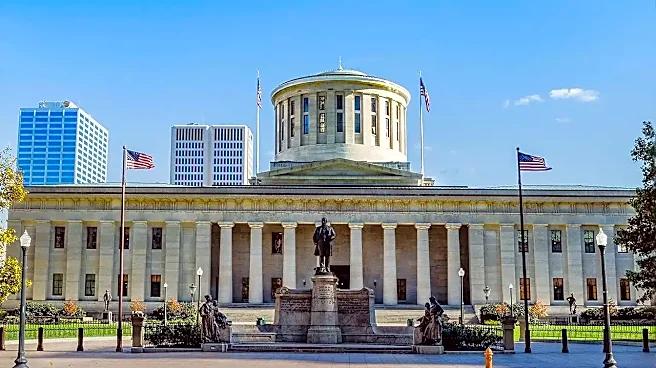
For the sixth time in as many decades, the U.S. Census brought a familiar result for Ohio: the loss of a congressional seat. After the 2020 Census numbers were finalized, it was determined that Ohio's population growth hadn't kept pace with faster-growing states, particularly in the South and West. As a result, its delegation in the U.S. House of Representatives was reduced from 16 to 15, a change that took effect with the 2022 elections. This shrinkage means Ohio has slightly less influence in Washington, D.C., and it kicked off a fierce, multi-year battle over how to draw the boundaries for the new, smaller set of districts.
The Long and Winding Road to a New Map
Drawing new political maps is never easy, but Ohio's post-2020 redistricting process was especially chaotic. Voter-approved
reforms from 2018 were designed to encourage bipartisan consensus, but the process quickly devolved into partisan trench warfare. The first map passed by the Republican-led legislature was swiftly struck down by the Ohio Supreme Court as an unconstitutional partisan gerrymander. The task then fell to the Ohio Redistricting Commission, a seven-member panel of politicians. Their first attempt was also rejected by the court. A subsequent map was approved on party lines, but because it lacked bipartisan support, it was only valid for four years—covering the 2022 and 2024 elections. This temporary solution legally required the state to go through the whole process again to create a map for the 2026 elections and beyond.
A Bipartisan Deal for 2026
Facing another deadline in the fall of 2025, and with Republicans threatening to pass a map that could create a 13-2 partisan advantage, both sides returned to the negotiating table. In a surprise move on October 31, 2025, the Ohio Redistricting Commission unanimously approved a new congressional map. This bipartisan agreement ensures the map will remain in effect for the rest of the decade, through 2031. While Democrats agreed to the deal, some described it as choosing the best of bad options, as the new map still favors Republicans. The consensus was that this compromise map was better than the more aggressively partisan alternative Republicans could have passed on their own.
What the New Map Means for Ohio Politics
The new district lines, which will be used for the first time in the November 2026 election, are expected to shift the state's political landscape. Under the previous 2022-2024 map, the delegation consisted of 10 Republicans and 5 Democrats. The new map makes several key districts more challenging for incumbent Democrats. Notably, the 9th District, represented by Marcy Kaptur, and the 1st District, represented by Greg Landsman, were both redrawn to be more favorable to Republicans. In contrast, the 13th District, held by Emilia Sykes, became slightly more Democratic-leaning. Based on voting patterns, analysts predict the new map could lead to a 12-3 Republican majority in Ohio's congressional delegation, though several districts are expected to be highly competitive.