

The Main Player: The Board of Elections
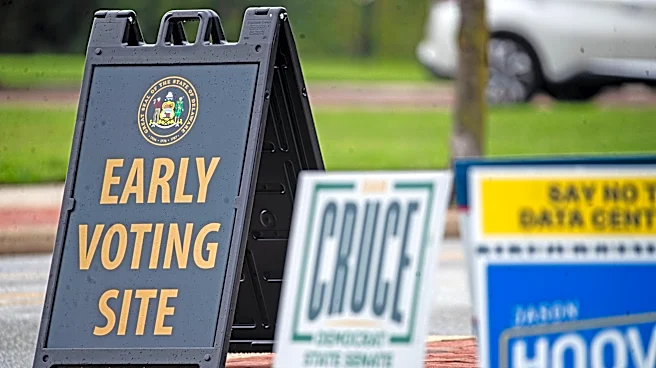
The short answer is that the District of Columbia Board of Elections (BOE) runs the show. Established as an independent agency, the BOE is responsible for the day-to-day nuts and bolts of democratic processes in the nation's capital. Its mission is to handle everything from registering eligible residents to conducting the elections themselves and ultimately ensuring the integrity of the results. This body manages voter rolls, administers ballot access for candidates, provides voter information, maintains voting systems, and implements every local election in D.C. It operates as a distinct entity, separate from the Mayor's office or the D.C. Council, to maintain impartiality in its operations.
Who Sits on the Board?
The BOE itself is a three-member board. These are
not elected officials but rather private citizens appointed by the Mayor of the District of Columbia and confirmed by the D.C. Council. This structure is designed to create a bipartisan body. By law, no more than two members of the board can be from the same political party, a common feature in election administration bodies across the country to foster fairness and public trust. These board members, alongside an executive director and a professional staff, are the people on the ground tasked with making sure elections run smoothly and in accordance with both local and federal law.
The Shadow of Capitol Hill
Here's where Washington, D.C.'s unique status comes into play. While the BOE manages local elections, it does so under the legal framework of the District of Columbia Home Rule Act of 1973. This act granted D.C. residents the right to elect their own mayor and council, giving the city a degree of self-governance for the first time in a century. However, the Home Rule Act was a compromise. Congress retained ultimate authority over the District. This means that all laws passed by the D.C. Council, including those related to elections, must undergo a congressional review period before they can take effect. In recent years, this has become a significant point of friction, with members of Congress attempting to block or overturn D.C. laws, such as those concerning mail-in voting or non-citizen participation in local elections. This creates a dual reality: D.C. runs its own elections, but Congress always has the option to intervene.
A System Under a Microscope
Because it's the nation's capital, D.C.'s election system often finds itself under a national microscope, becoming a testing ground or a political football for broader debates. For instance, the city’s recent implementation of ranked-choice voting, approved by voters via Initiative 83, is a major shift that the BOE is tasked with rolling out for the 2026 primaries. Similarly, the D.C. Council's move to allow non-citizen residents to vote in local elections drew immediate and intense scrutiny from Capitol Hill, leading to House votes to overturn the measure. These instances highlight the constant tension between local democratic will and federal power. The people who run D.C. elections are not just managing logistics; they are operating on a political fault line, navigating the complexities of a city that governs itself but is not entirely its own master.