





First, Who Actually Draws the Lines?
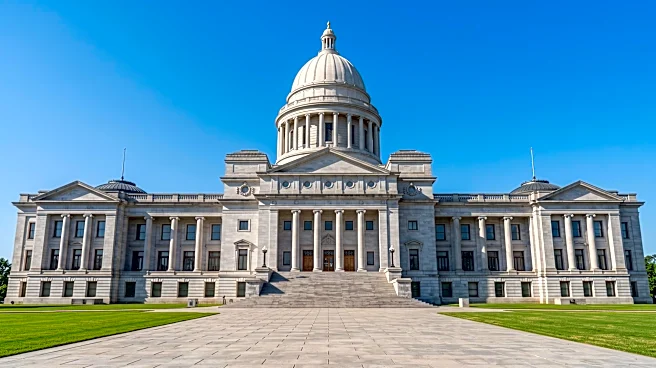
In Arkansas, the responsibility for drawing the state's four U.S. congressional districts falls to the state legislature, known as the General Assembly. Members of the state House and Senate are the ones who draft, debate, and must ultimately pass a single redistricting plan in the form of a bill, just like any other piece of legislation. This process happens every 10 years after the U.S. Census releases new population data. The goal is to ensure each district has a nearly equal number of people. This legislative-driven process is a crucial first point: the governor is not in the room where the initial map-drawing happens.
The Governor’s Real Power: The Veto Pen
The governor’s primary and most direct influence over congressional maps comes after the legislature has done its work. Once
the General Assembly passes a congressional redistricting bill, it lands on the governor’s desk. At this point, the governor has three choices: sign it into law, allow it to become law without a signature, or veto it entirely. A veto sends a powerful message that the governor rejects the legislature's plan. This might be due to concerns about fairness, partisan gerrymandering, or how the maps divide communities of interest. This veto power is the governor’s biggest lever in the entire congressional redistricting process.
A Common Point of Confusion
Much of the public uncertainty about the governor's role stems from a misunderstanding between two separate redistricting processes in Arkansas. While the legislature handles congressional maps, a different body handles the districts for state-level offices (the 100 state House and 35 state Senate seats). Those maps are drawn by the Arkansas Board of Apportionment, which consists of three people: the Governor, the Secretary of State, and the Attorney General. So, the governor has a very direct, hands-on role in drawing state legislative maps as part of this commission, but has no such role for congressional maps.
What Happens After a Veto?
A governor's veto is a major roadblock, but it's not necessarily the end of the story. The Arkansas General Assembly can override a gubernatorial veto with a simple majority vote in both chambers. If the legislature has enough votes to overcome the veto, the map becomes law despite the governor’s objection. This check and balance means the governor’s power is strongest when the legislature is closely divided or when members of the governor’s own party are willing to sustain the veto. If the legislature is controlled by an opposing party with a strong majority, the veto may be more of a political statement than a final backstop. For example, in 2021, Governor Asa Hutchinson was unhappy with the legislature's map but, likely anticipating a veto override, allowed it to become law without his signature as a sign of his disapproval.
The Courts as a Final Backstop
If the legislative and executive branches are deadlocked, or if advocacy groups believe a map is illegal, the final arbiter is the court system. Lawsuits can challenge congressional maps in federal court, arguing that they violate the U.S. Constitution or federal laws like the Voting Rights Act by discriminating against minority voters. Challenges can also be filed in state court. These legal battles, which often focus on allegations of racial or political gerrymandering, can ultimately force maps to be redrawn, acting as a check on both the legislature that passed the map and the governor who signed it.