

The Simple Answer: Still Three Districts
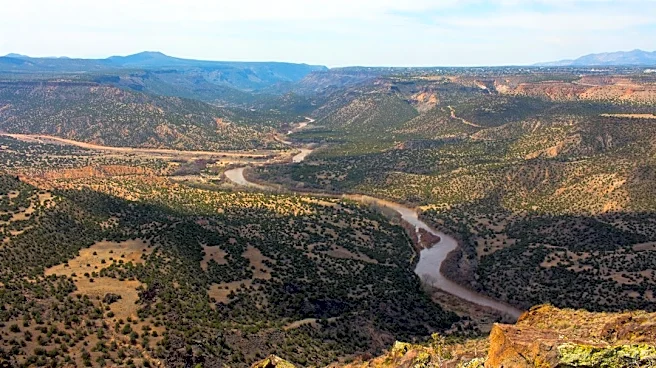
First, the straightforward part. New Mexico has three congressional districts, a number that remained unchanged after the 2020 U.S. Census. For decades, the state's political geography was relatively stable: the 1st District centered on Albuquerque, the 3rd covered the northern part of the state including Santa Fe, and the 2nd encompassed the vast southern region. While the number of seats in the U.S. House of Representatives didn't change, the lines defining who votes in which district certainly did, sparking a political and legal firestorm that went all the way to the state's Supreme Court.
Why the Lines Were Redrawn
Every ten years, following the U.S. Census, states redraw their legislative and congressional district boundaries to ensure each district has a nearly equal
population. This process, known as redistricting, is inherently political. In New Mexico, the power to draw these maps rests with the state legislature, which in 2021 was controlled by the Democratic Party. While a newly created Citizen Redistricting Committee proposed several concepts, the legislature had the final say. In a special session in December 2021, lawmakers passed a new congressional map that was promptly signed into law by Democratic Governor Michelle Lujan Grisham.
The Controversial New Map
The new map dramatically altered the state's 2nd Congressional District (CD-2). Previously a Republican stronghold, CD-2 was reshaped by the Democratic-led legislature to be more competitive. The map achieved this by splitting a conservative, oil-producing region in the state's southeast corner among all three districts and, crucially, adding parts of traditionally Democratic Albuquerque to the once staunchly Republican southern district. This move effectively diluted the Republican vote in CD-2, giving Democrats a 12% voter registration advantage in a district where party affiliation was once evenly split. The result was immediate and decisive: in the 2022 election, Democratic challenger Gabe Vasquez narrowly defeated the incumbent Republican, Yvette Herrell, flipping the seat.
A Legal Battle Over Gerrymandering
The Republican Party of New Mexico quickly filed a lawsuit, arguing the new map was an unconstitutional partisan gerrymander designed to dilute GOP votes and entrench Democratic power. The case worked its way through the courts, establishing a new legal precedent in the state. In a key ruling, the New Mexico Supreme Court determined that partisan gerrymandering claims could, in fact, be tried under the state's constitution—a protection not currently offered at the federal level. The case went to a lower court, where a judge found that while the map was intentionally drawn to favor Democrats, it did not rise to the level of an "egregious" gerrymander because a Republican victory was still possible, albeit difficult. In November 2023, the New Mexico Supreme Court unanimously upheld this decision, cementing the new, more competitive map for the remainder of the decade.
The Districts as They Stand Today
As a result of the redistricting and subsequent court battles, New Mexico’s three districts now have distinct political identities. The 1st District (NM-1), represented by Melanie Stansbury, remains a safe Democratic seat centered in the Albuquerque area. The 3rd District (NM-3), represented by Teresa Leger Fernandez, covers northern New Mexico and is also strongly Democratic, with a significant Hispanic and Native American population. The real battleground is the redrawn 2nd District (NM-2), represented by Gabe Vasquez. Stretching across the state's southern half but now including parts of the capital city, it is considered an evenly matched district, making it one of the most closely watched races in the country.