




Securing the Ballots: The First Steps
The journey of a ballot begins with security. Whether you vote in person on Election Day or cast an advance ballot by mail or at a drop box, chain-of-custody procedures are paramount. Bipartisan teams of election workers collect ballots from drop boxes, logging every transfer to ensure all are accounted for. At polling places, ballots are stored in sealed containers. Advance ballots received by mail are kept in secure, signed envelopes. The entire system is designed to create a verifiable paper trail from the moment you vote until the final count.
The Signature Check: A Bipartisan Review
For advance mail-in ballots, the first major hurdle is signature verification. Kansas law has required this for over a decade. When your ballot arrives at the county election office, officials compare
the signature on the outer envelope to the one in your voter registration file. This isn't a single person making a snap judgment. To be rejected for an inconsistent signature, at least two trained election officials must agree. If a signature is missing or doesn't match, the office is required to contact the voter by phone or mail to 'cure' the issue, giving them a chance to confirm their identity before the final canvass.
Preparing for Tabulation
Once signatures are verified, bipartisan teams prepare the ballots for counting. This involves carefully opening the outer envelopes to preserve the voter's anonymity and flattening the ballots so they can be fed into scanning machines. In some counties, a receiving board handles this process while a separate counting board prepares for tabulation. All official Kansas ballots have a unique watermark or symbol to verify they are authentic and not photocopies. These physical security features are another layer designed to ensure only legitimate votes enter the count.
The Count Begins: Scanners and Paper Trails
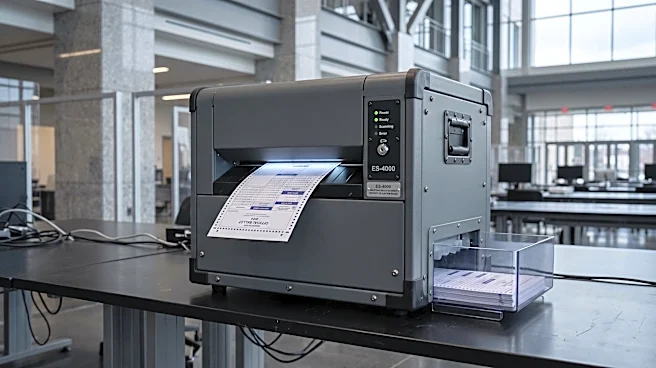
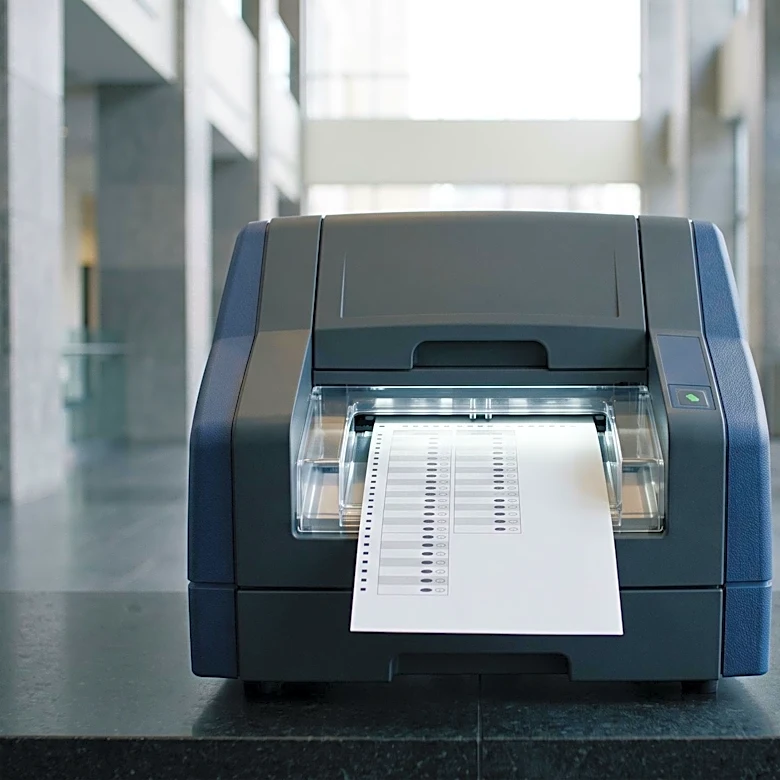
Most Kansas counties use optical scanning machines to tabulate votes. These machines are not connected to the internet. Before and after every election, each machine undergoes public accuracy testing to ensure it's functioning correctly. Voters feed their paper ballot directly into the scanner, which reads the marked ovals and adds them to the tally. This creates both a digital record and, critically, preserves the original paper ballot—a physical record of every vote cast. On election night, the first results released are typically all the advance votes that have been processed, followed by results from polling places as they are delivered by election workers.
The County Canvass: Making it Official
The results you see on election night are unofficial. The official count happens days later during a public meeting called the county canvass. This is where the county's Board of Canvassers, which is usually the Board of County Commissioners, reviews all the paperwork from the election. They make final determinations on provisional ballots—those cast when a voter's eligibility is in question. For example, if a voter didn't have a valid photo ID at the polls, they can present it to the election office before the canvass to have their vote counted. Once all valid provisional ballots are added, the board certifies the results as official.
The Final Verification: Mandatory Audits
Before the canvass can even happen, Kansas law requires a post-election audit. In every county, officials must randomly select at least one percent of precincts and manually hand-count the paper ballots for specific races. The hand count is then compared to the machine tally from election night. This process, which is open to the public, confirms that the tabulation equipment was accurate. If a statewide race is exceptionally close (within a 1% margin), an additional, more extensive audit of that race is automatically triggered. These mandatory audits provide a final, tangible check on the integrity of the entire election.