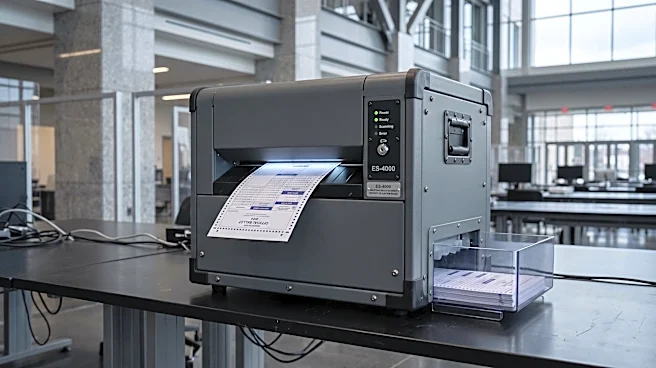








Step 1: Casting and Securing Your Vote
Whether you vote early, on Election Day, or by mail, the process starts with strict identity verification. In-person voters must show a valid state or federally issued photo ID. Most counties use hand-marked paper ballots that are fed into an optical scanner, which creates both a digital tally and a physical paper trail. These voting machines are not connected to the internet. For absentee ballots, which require a valid excuse in Tennessee, election officials first compare the signature on the ballot's outer envelope to the one on file in the voter's registration record. If the signature matches, the ballot is accepted for counting.
Step 2: Bipartisan Oversight and Chain of Custody
Once polls close, the chain of custody for every ballot is paramount. At polling places, bipartisan poll officials
work together to close down the machines and account for every vote cast. The ballots, whether cast in person or delivered by mail to the county election commission, are secured in sealed containers. These containers are then transported to a central counting location managed by the county's bipartisan election commission. This process ensures that from the polling place to the final tally, representatives from different political parties are involved, providing a crucial check and balance on the system's integrity.
Step 3: The Central Count Under Lock and Key
At the county election commission office, the official counting begins—but no results can be released until every poll in the county is closed. For absentee ballots, a dedicated bipartisan counting board takes over. They open the ballot boxes and verify the seals. The outer envelopes containing voter affidavits are separated from the sealed inner envelopes holding the ballots, preserving voter anonymity. The ballots are then opened and tabulated. Ballots cast in person are tallied from the voting machine memory cards onto a secure, air-gapped server. Any ballot that is damaged or cannot be read by a machine is reviewed by election officials to determine voter intent.
Step 4: The Audit - Verifying the Numbers
The results reported on election night are always unofficial. To ensure accuracy, Tennessee law requires post-election audits. Starting in 2024, the Secretary of State randomly selects several counties to conduct detailed audits after August and November elections. Counties not selected by the state must still perform their own mandatory audit, which involves re-tabulating the votes for the top race on the ballot in randomly selected precincts. These audits use the paper ballots to check against the machine totals. This process provides a powerful safeguard by confirming that the electronic count was accurate.
Step 5: Certification - Making It Official
The final step in the process is certification. After all ballots are counted and audits are completed, each of Tennessee's 95 county election commissions meets to verify and certify its local results. This is a public process where the bipartisan commission confirms that all procedures were followed correctly and the final tallies are accurate. Once certified at the county level, the results are sent to the state. The state then compiles these results to make the election outcome official. Only after this final, meticulous step is the journey of your ballot truly complete.