





The Basic Building Block of Your Vote
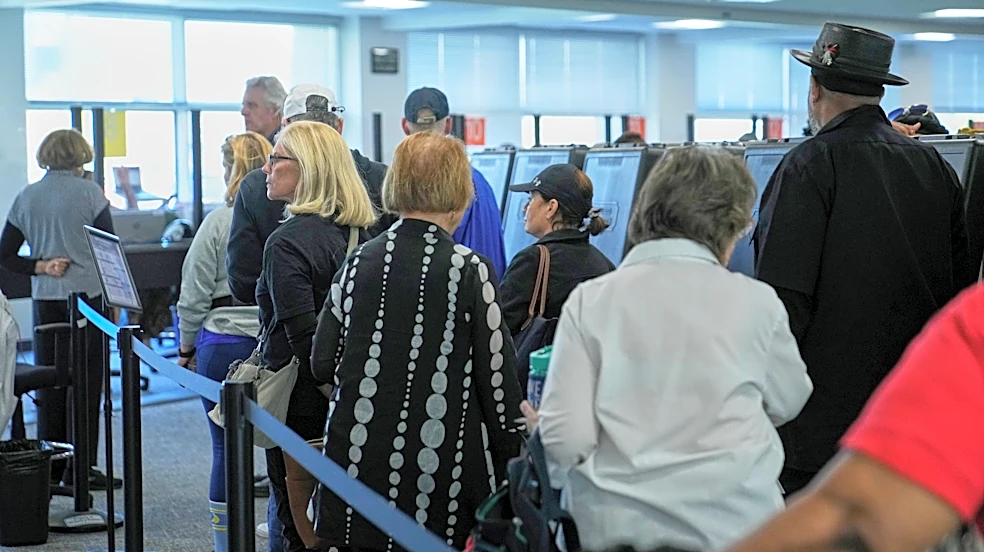
Think of a precinct as your neighborhood's designated voting zone. In Virginia, it's a small, defined geographical area created by a city or county's local government for the sole purpose of administering elections. Every residential address in the Commonwealth is assigned to a specific precinct. Legally, these areas must be compact, contiguous territories with clear, observable boundaries like roads, rivers, or railway lines. Property lines alone aren't enough. This ensures there's no confusion about which precinct you belong to. It's the foundational unit that tells the entire election system where you, the voter, fit into the democratic process.
More Than Just Where You Vote
A precinct does more than just assign you to a polling place, though that is its most visible function.
Crucially, your precinct determines which elections you can vote in. Because a precinct must be located entirely within one specific congressional district, one state senate district, one House of Delegates district, and one local government district, it ensures you receive the correct ballot. The candidates you see for School Board, City Council, the General Assembly, and Congress are all determined by the precinct lines drawn around your home. This administrative function is what allows a massive, complex system of representation to work on a person-by-person basis, guaranteeing that your vote is cast for the officials who will directly represent you.
So, How Many Precincts Are There?
So, what's the magic number? As of June 2024, there were 2,535 voting precincts across the Commonwealth of Virginia. However, this number isn't set in stone. Local governing bodies can, and do, create new precincts or redraw existing ones as populations shift. The Virginia code sets specific rules for their size. For instance, when a precinct is created, it must have at least 100 registered voters in a county or 500 in a city, but no precinct can have more than 5,000 registered voters. If a precinct grows too large—specifically, if more than 4,000 people vote there in a presidential election—the local government is required to re-evaluate and adjust the boundaries to keep voting manageable.
Who Draws These All-Important Lines?
The responsibility for establishing and altering precinct boundaries falls to the local governing body of each county and city, which does so by passing an ordinance. This process, however, is a team effort. The local General Registrar and Electoral Board are typically deeply involved, advising the government on where new precincts are needed and ensuring all changes comply with state and federal law. These changes can't happen on a whim; they must be published for public review, and no new lines can be drawn within 60 days of a general election to avoid confusion. This process most often gets a major workout every ten years after the U.S. Census, when larger state and federal districts are redrawn through redistricting, requiring localities to adjust their precinct lines to fit neatly within the new maps.