

NEW YORK (AP) — Furniture poses significant challenges during a move, as quality dressers and couches are both bulky and costly. In times of stress, the
appeal of inexpensive, quickly delivered options becomes evident, leading many to consider fast furniture.
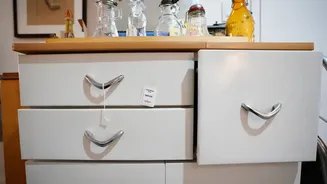
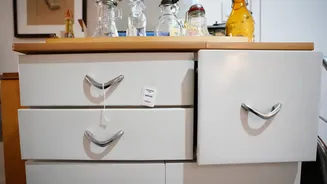
Fast furniture consists of simple items constructed from a combination of plastics, fiberboard, and chipboard, lacking durability. These products are typically available online, mass-produced, and shipped unassembled in flat-packed boxes.While they serve their purpose, once discarded, the materials are often non-recyclable and do not decompose efficiently.
“It’s of little emotional value, it’s fleeting, and it is not going to accompany you through your life’s journey,” remarked Deana McDonagh, a furniture and design expert at the University of Illinois Urbana-Champaign.
According to the Environmental Protection Agency, Americans disposed of over 12 million tons of furniture in 2018, with 80% ending up in landfills.
Although moving can be chaotic, fast furniture appears to be a practical solution. However, alternative decorating methods exist that can be just as economical and fulfilling.
When Heather Strong relocated to her own place in the Los Angeles area as a newly single individual, she felt as though she was starting anew. Many cherished pieces of furniture, including her beloved pan rack, remained with her ex in the previous home.
She then discovered the Buy Nothing Project, a network of local Facebook groups and an app where individuals can give and receive items for free. A year and a half later, Strong has furnished her residence with dining chairs, wooden furniture, and bedding sourced from her neighbors.
“I’ve had the chance to explore different areas of my own community and venture out a little. And I’ve made some friends,” said Strong, who owns a business.
Liesl Clark, co-founder of Buy Nothing, advises reaching out to neighbors before purchasing unassembled furniture. She suggests exploring neighborhood Facebook and Nextdoor groups, checking gifting sites like Freecycle, and asking acquaintances if they know anyone giving away furniture. Additionally, one might find valuable items left on curbs or porches.
“You will get so much more satisfaction. You’ll save funds that you can then perhaps spend more locally,” Clark added.
Maddie Fischer has furnished the majority of her Brooklyn apartment with secondhand items. She discovered one of her living room chairs discarded in a trash bag on the street and obtained her kitchen table for free during a move-out giveaway, with help from her sister and friends to carry it down four flights of stairs.
“I don’t mind when things look like they’ve had a little bit of wear and tear,” said Fischer, a social media manager. “I think it gives them more character.”
If curbside finds are insufficient, consider shopping secondhand. Thrift stores in the neighborhood or platforms like eBay, Vinted, and Gumtree can offer valuable options. Furniture rental websites are also available for sourcing quality items temporarily, though they can be expensive.
If finances allow, it is never too early to contemplate investing in high-quality furniture. Items made of wood and other natural materials are often more unique and add a personal touch to the home. Moreover, they tend to last longer, reducing the need for frequent replacements.
Decorating a vacant home all at once can accumulate significant costs. McDonagh recommends purchasing one quality piece of furniture each year. “If you’re doing it for your future self, take your time,” she suggested.
Opt for modular pieces, such as shelves and storage units, which can be stacked and adjusted according to space limitations. Over time, this approach can lead to a collection of durable items that enhance the home’s warmth.
In the interim, utilize existing items creatively. A stack of books or boxes can serve as a temporary chair while awaiting a sturdier piece, McDonagh noted. Surprisingly, outdoor furniture can function effectively indoors due to its durability against scratches and stains.
Despite its name, fast furniture can endure for many years with proper care. Through creativity and maintenance, it need not be replaced frequently.
“I don’t believe that any furniture is inherently fast. It’s our decision as consumers whether it’s fast or not,” asserted Katryn Furmston, a fast furniture expert at Nottingham Trent University in England.
Some may hesitate to carry a desk up several flights of stairs, while others might feel uneasy about sitting on a used couch.
If purchasing fiberboard furniture is necessary, avoid overly cheap websites that may leave you with missing parts or an unstable desk. Upon arrival, take care of the piece. Cover scratches with a tablecloth or rotate it to face a different direction.
When moving, keep a photograph of the item handy to share with friends or coworkers. Consider giving it a second life by selling it in a community group or gifting it to a neighbor, thereby extending its usefulness.
___
Associated Press journalist Kiki Sideris contributed to this report.
___
The Associated Press Health and Science Department receives support from the Howard Hughes Medical Institute’s Department of Science Education and the Robert Wood Johnson Foundation. The Associated Press’ climate and environmental coverage also receives financial support from multiple private foundations. AP is solely responsible for all content. Find AP’s standards for working with philanthropies, a list of supporters and funded coverage areas at AP.org.