






What is the story about?

ChatGPT creator OpenAI has filed preliminary paperwork that could lead to its debut as a publicly traded company, marking a significant moment in the competitive
landscape of artificial intelligence firms aiming for Wall Street. The San Francisco-based company announced on Monday that it has submitted confidential documentation to the U.S. Securities and Exchange Commission.
In a statement, OpenAI indicated, “We expect it to leak so we’re just announcing it. We have not decided on timing yet; it may be a while because there are things we want to do that are likely easier as a private company. But it’s a complicated set of tradeoffs and this gives us the option to go public sooner if that ends up being best.”This strategic move by OpenAI follows the June 1 announcement from its rival, Anthropic, which is also preparing for an initial public offering. The company is now joining Elon Musk's SpaceX, which has commenced an IPO roadshow, branding itself as an AI-focused space enterprise.
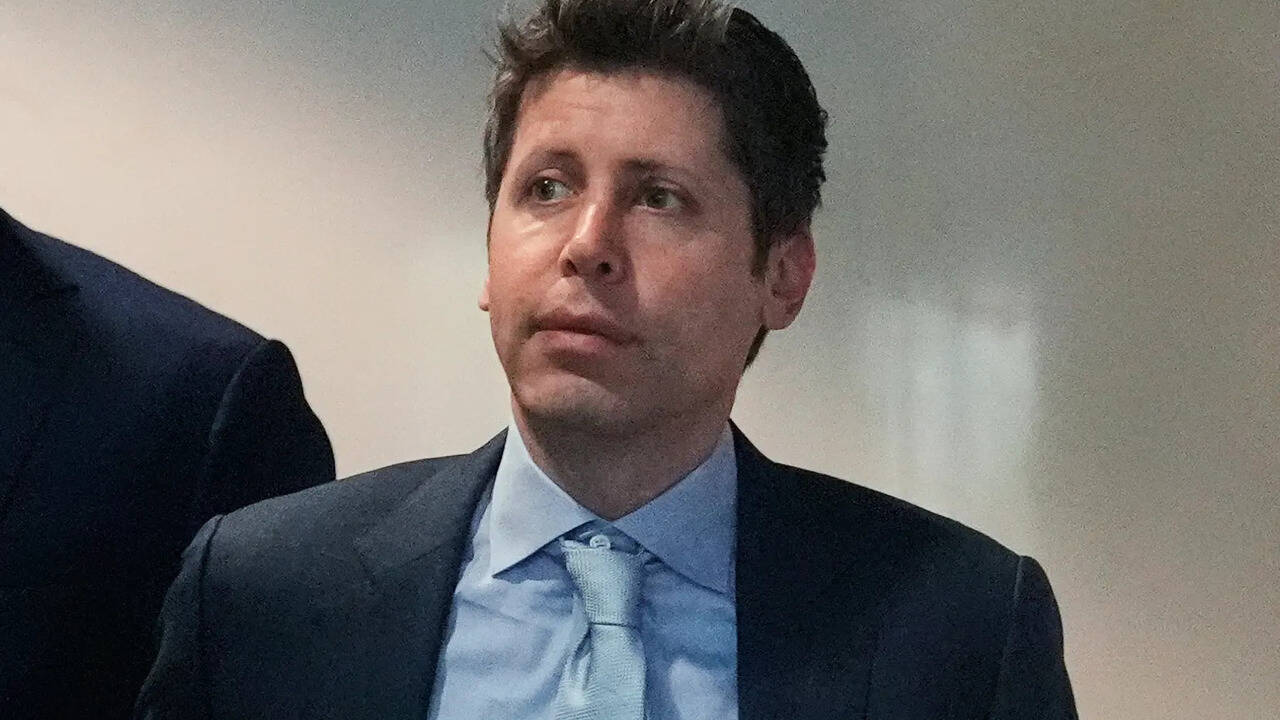
OpenAI's CEO, Sam Altman, had previously suggested the possibility of an IPO last fall, describing it as the “most likely path” for the company, given its size and the significant capital required to advance its technological innovations.
Founded in 2015 as a nonprofit aimed at developing artificial intelligence for the common good, OpenAI is now valued at $852 billion. The timing of the filing comes at a “precarious moment” for the company, as it appears to be losing ground in consumer and business engagement with ChatGPT to competitors like Google and Anthropic, according to Emarketer analyst Nate Elliott.
“But OpenAI doesn’t have a lot of other places to look for the enormous capital required to support its costs,” Elliott remarked.
Last year, OpenAI took significant steps toward going public by reorganizing its business structure, transforming itself into a public benefit corporation while still operating under the auspices of a nonprofit. Last month, OpenAI overcame another hurdle when it successfully defended itself against Musk in a federal jury trial. Musk, an OpenAI co-founder, had sought to remove Altman from leadership and reverse the company’s shift to a for-profit model. The case was dismissed after the jury determined that Musk had filed his lawsuit too late.
OpenAI has yet to publicly disclose its financial performance or a timeline for achieving profitability. Like Anthropic and SpaceX, OpenAI has been incurring losses due to the substantial costs associated with scaling its operations. The company faces stiff competition from Anthropic, the developer of the increasingly popular chatbot Claude, and Google's AI assistant Gemini.
In an April interview, OpenAI’s Chief Financial Officer Sarah Friar refrained from providing a specific timeline for a potential IPO but stated that the company is already “acting with the good hygiene of a public company,” including tracking its revenue in a manner consistent with SEC reporting requirements.
“I want us to be ready,” she told The Associated Press. “I think it’s good to be able to tap the public markets. They’re much bigger than the private markets.”
Friar noted that OpenAI's current valuation positions it among the 15 largest companies in the S&P 500.
She also mentioned that there is a significant value in being recognized as a public company.
“At that point, people are checking your balance sheet, the SEC is governing you and so on,” she added.
In a separate statement released concurrently with the announcement of the confidential filing, Altman outlined an ambitious vision for OpenAI that includes three primary objectives: developing an automated AI researcher, driving economic growth, and ensuring that “everyone on Earth has access to a personal AGI,” referring to artificial general intelligence, which aims to surpass human capabilities in various tasks.
Altman explained that OpenAI began with a focus on AI research, transitioned into commercial product development, and is now entering a new phase that emphasizes the equitable distribution of power as the economy adapts to AI technology.
He emphasized that OpenAI is “working to ensure the gains are widely shared. Everyone should have an opportunity for a meaningful share in the prosperity AI creates.”
These comments follow Altman's recent meeting with Senator Bernie Sanders, who advocates for public ownership stakes in AI companies like OpenAI, alongside remarks from President Donald Trump supporting public investment in AI growth.
___
AP Technology Writer Kaitlyn Huamani contributed to this report.