







What is the story about?

Days after Spirit Airlines ceased operations unexpectedly, a lawyer representing the airline expressed regret in court to the budget-conscious customers
who may now find it difficult to secure affordable flights. “We apologize most specifically to those Americans who may now be priced entirely out,” Spirit lawyer Marshall Huebner stated, thanking the passengers who depended on the airline during its 34 years of service, noting that many of them “could not otherwise have afforded air travel.”
Spirit Airlines' closure on May 2 adds to the challenges for travelers preparing for the summer season, which traditionally kicks off on Memorial Day. Rising jet fuel costs, exacerbated by geopolitical tensions in the Middle East, have led to increased airfares and fees across the aviation sector. Furthermore, two remaining budget carriers have recently merged, complicating the landscape for low-cost air travel.The current climate reflects the difficulties faced by low-cost airlines as they contend with fluctuating fuel prices, inflation, and intense competition. While budget airlines typically attract price-sensitive customers, traditional airlines have a greater capacity to generate revenue through premium services, membership rewards, and corporate travel programs.
“Dynamic pricing has taken away one of the last structural advantages that low-cost carriers had,” remarked Shye Gilad, a former airline captain and current educator at Georgetown University.
For years, low-cost carriers thrived by offering prices that traditional airlines could not match without incurring losses. However, that advantage has diminished as the major airlines—American, Delta, and United—have improved their pricing strategies and as carriers like JetBlue and Southwest have begun targeting higher-paying customers.
Today, major airlines can offer a limited number of seats at Spirit-level prices while still commanding higher rates for standard and premium options elsewhere on their flights, which has made it increasingly challenging for budget airlines to compete on price alone.
“They can’t just be the cheapest airline anymore,” Gilad noted. “They have to be the smartest low-cost airline.”
In tandem with rising jet fuel prices, which have surged due to the conflict in the Middle East, the Association of Value Airlines requested $2.5 billion in temporary federal assistance to help budget airlines cope with increased operational costs.
However, Airlines for America, representing larger carriers such as Alaska Airlines and American Airlines, opposed the request, arguing that federal support would unfairly benefit budget airlines at the expense of those who have made difficult adjustments to manage costs.
“Government intervention on behalf of those airlines would punish other airlines that have engaged in self-help in order to deal with increased costs and reward airlines who haven’t made those tough decisions,” Airlines for America stated. Transportation Secretary Sean Duffy denied the request on the same day Spirit stopped operating.
Even before the recent spike in fuel prices, consolidation was already occurring in the budget airline sector. Alaska Airlines completed its $1 billion acquisition of Hawaiian Airlines in September 2024, agreeing to maintain service levels on key routes where competition was limited.
Spirit Airlines had been an unsuccessful merger target for both Frontier and JetBlue as its financial losses mounted following the pandemic.
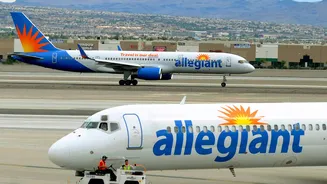
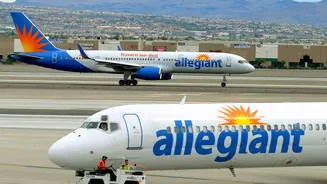
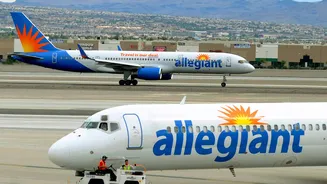
Allegiant Air recently announced the finalization of its $1.5 billion acquisition of Sun Country Airlines, a deal that merges passenger services with Sun Country's cargo and charter operations.
“Consolidation is a signal” of weakness within the industry, Gilad remarked. “If you can remove a competitor and enhance your product offering, you might be able to achieve greater profitability.”
Experts highlight the diversity among budget airlines, which may enable some carriers to better withstand rising fuel costs and market fluctuations than others. Vikrant Vaze, an aviation systems expert at Dartmouth College, noted that budget airlines vary significantly, encompassing both struggling carriers like Spirit and successful giants like Southwest Airlines.
“Even though they can be categorized as budget airlines, they are very different from each other,” Vaze explained. “They possess varying degrees of budget-ness.”
Allegiant focuses on leisure travel and operates primarily from smaller airports with less direct competition. In contrast, JetBlue, a hybrid low-cost carrier, emphasizes premium seating and loyalty programs more than Spirit ever did.
Frontier Airlines aligns most closely with Spirit's ultra-low-cost model, yet analysts believe it entered this period of volatility with stronger financial reserves and may capitalize on Spirit's departure. The airline has already begun expanding into markets previously dominated by Spirit, including Las Vegas, Detroit, and various cities in Florida.
Gilad draws parallels to his experience as a pilot for Independence Air, a budget airline that failed during bankruptcy proceedings in 2006 after burning through nearly $200 million in just 18 months due to rising fuel costs.
“It was just that quick that they were gone,” he said, reflecting on the current pressures that continue to challenge budget airlines, noting that fewer options remain in the market today.
This story has been updated to correct the date of Spirit's closure, which was May 2, not May 3.