




What is the story about?

The Middle East braced for the possibility of a return to full-scale war after Israel and Iran fired at each other. It was the first such exchange since
a ceasefire two months ago. Also Monday, Iranian-backed Houthi rebels in Yemen launched a missile at Israel and threatened to disrupt Red Sea shipping.
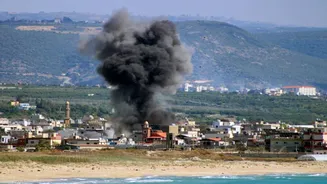
Iran fired at Israel after warning against Israel's attacks in Lebanon, including strikes on Beirut on Sunday. Israel claims it is targeting the Iranian-backed Hezbollah militant group. Its Beirut strike defied Washington’s request days ago to stand down.The Israeli strikes against Iran came after U.S. President Donald Trump told Israeli Prime Minister Benjamin Netanyahu that he didn't think Israel needed to respond further.
The Israeli prime minister’s brief statement added that “right now, the fire has been halted.” It was his first public statement since Iran fired missiles at Israel late Sunday, which were intercepted.
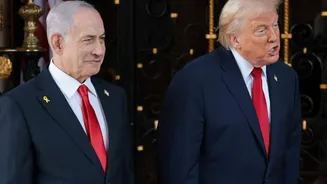
Netanyahu asserted Israel’s right to self-defense, stating, “and I say this with appreciation and respect in my good conversations with my friend President Trump.” He appears to have openly defied Trump with a strike in Beirut on Sunday and then retaliatory attacks against Iran.
Defense Minister Israel Katz said Monday night that any attack on Israel’s northern settlements will immediately prompt an attack on Beirut’s Dahiyeh suburbs. Katz warned Iran that any attempt to use Israel’s attacks against Hezbollah as an excuse to launch missiles against Israel would be “met with great force, as happened yesterday.”
Turkey is pressing ahead with its contacts with both the United States and Iran to end the war while also consulting with countries in the region, Foreign Minister Hakan Fidan said. He emphasized, “It is essential to leave behind this war that has brought our region and the world to the brink of disaster,” during a news conference following meetings in Istanbul with his Azerbaijani and Georgian counterparts.
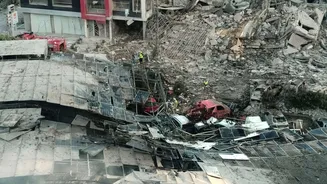
Israeli strikes on Iran Monday wounded at least 15 people, according to the National Emergency Medical Organization, which published a statement via the Iranian official news agency. No fatalities have been reported so far, and the statement did not specify whether the wounded were civilians or military personnel.
Shehbaz Sharif, Pakistan’s prime minister, expressed concern over the recent surge in violence in the Middle East and urged all parties to “exercise restraint.” In a post on X, Sharif remarked that the latest escalation was “a stark reminder of the dangers associated with a tenuous ceasefire and the unbearable consequences it may lead to.”
Israeli strikes on Monday resulted in at least five fatalities, including a child, across Gaza, according to hospital officials. The attacks, which struck Khan Younis in southern Gaza and Jabaliya in northern Gaza, left several others wounded.
The Israeli army stated it struck some Hamas and Islamic Jihad operatives, adding it would provide further details later. The attacks represent the latest in a series of strikes that have hit homes and shelters across Gaza since October’s fragile ceasefire aimed at halting the two-year war.
The U.S. informed Iran that there would be no further attacks by Israel if Tehran ceased its missile strikes, and that Israel has agreed to halt attacks for the time being, according to a regional official who spoke on condition of anonymity.
The Israeli military reported that it intercepted two projectiles fired from southern Lebanon, with one landing near soldiers without causing injuries. The launches triggered air raid sirens in northern Israel.
Education Minister Yoav Kisch announced that schools across Israel would remain closed for a second day, following the military's updated guidelines limiting large gatherings and canceling school nationwide for the first time since earlier fighting in April.
Iraq’s Civil Aviation Authority announced the reopening of the country’s airspace after a temporary 72-hour closure in response to the renewed exchange of fire between Israel and Iran.
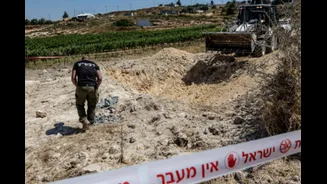
A missile was discovered partially buried in a field on the outskirts of Damascus on Monday, according to its owner, Mahmoud Ataya. He reported that residents heard a loud explosion during the night but did not immediately know what had occurred until they found the missile.
Ambassador Michel Issa of the U.S. made it clear that Washington does not want the Israel-Hezbollah conflict to expand, hinting at disagreements between President Trump and Netanyahu over Lebanon.
The Iranian military’s joint command announced it was halting offensive operations after the recent exchange of fire, stating that any further aggression from Israel would result in “much more severe and crushing measures.”
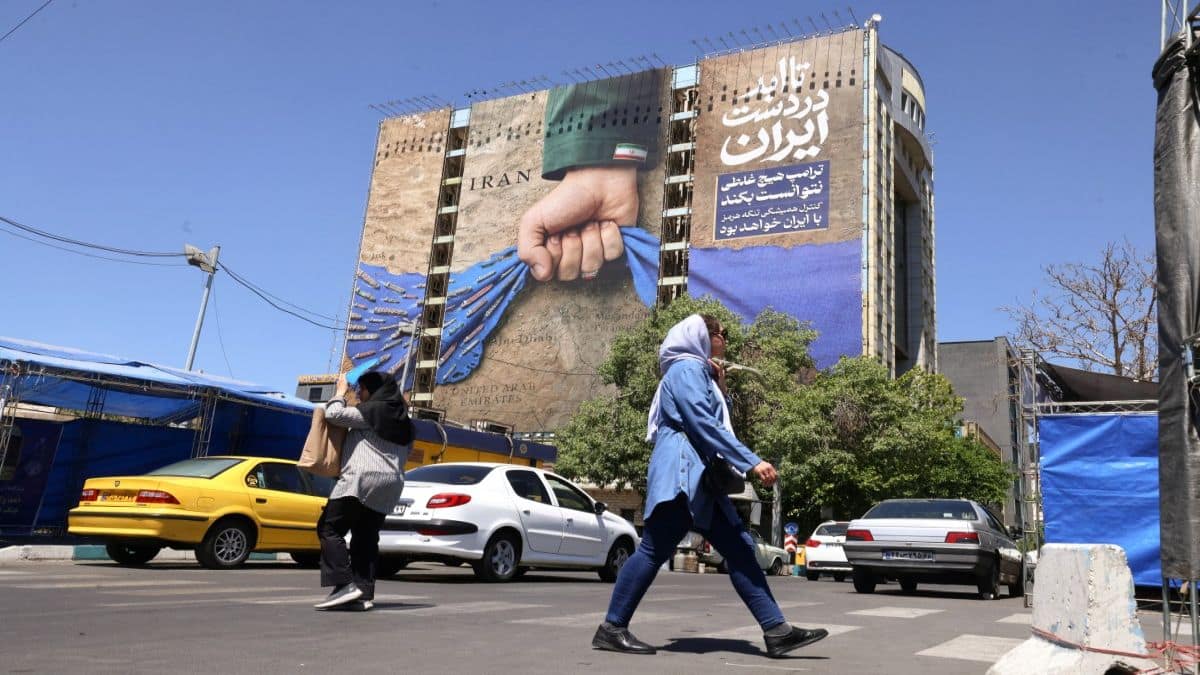
The European Union has approved sanctions against Iranian individuals and entities involved in disrupting transit through the Strait of Hormuz, marking the first application of a new freedom-of-navigation sanctions system.
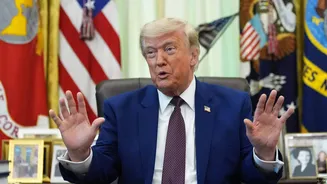
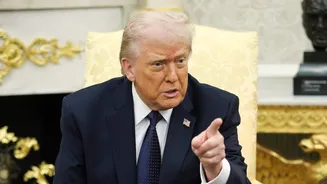
Trump later insisted that both Israel and Iran were “looking to do an immediate CEASEFIRE!” while claiming that negotiations were ongoing.
The Israeli military confirmed it targeted petrochemical facilities in Mahshahr, which it claimed were used to produce components critical for ballistic missile development.
In a statement, the Iranian Foreign Ministry spokesman warned that the United States is responsible for the consequences of any escalation in the Middle East caused by Israel.
Israel’s rescue services reported no injuries from the latest missile attacks from Iran, while the Israeli military urged civilians to take shelter as alerts sounded in neighboring Jordan.
The Houthis, backed by Iran, declared a missile attack on Israel, stating that vessels affiliated with Israel would again be targets in the Red Sea, marking another escalation as the nominal ceasefire is challenged by crossfire.
Iran claimed the attacks on Israel were part of Operation Nasr, asserting that their fire targeted military bases in Israel.
The Israeli military reported hitting a petrochemical complex in Iran, though details on the damage were not provided.
Israel issued an all-clear after a second wave of Iranian missiles was detected, marking the most serious crossfire since the April ceasefire.
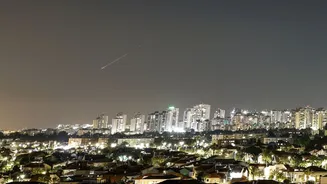
Sirens were activated near Israel’s main nuclear research site as the military detected missiles aimed at central and southern Israel, including the city of Dimona.
Israel confirmed it detected a missile launched from Yemen, sounding alerts across the country. The Houthis have previously targeted Israel but have not been fully involved in the Iran war.
Saudi Arabia also activated missile alert sirens in an area near a U.S. military base following Israel's strikes against Iran.
Trump had urged Israel not to respond to the missile fire, indicating he dictated terms to Netanyahu regarding the conflict.
The White House did not immediately comment on the strikes or whether they were coordinated with the U.S.
Iran closed airspace around Tehran’s Imam Khomeini International Airport after the Israeli attacks, as tensions in the region escalate.
Israel confirmed it targeted central and western Iran following missile fire, with Tehran reporting explosions heard in multiple cities.