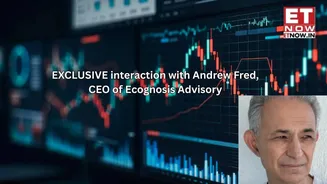


Market optimism around US interest rate cuts is premature and based on incomplete data, said Andrew Fred, CEO of Ecognosis Advisory, warning that American
equities—especially technology and artificial intelligence-linked stocks, remain significantly overvalued and vulnerable to a meaningful correction. Speaking in an interview, Fred questioned the US Federal Reserve’s recent policy stance, arguing that expectations of further rate cuts lack a solid data foundation. He pointed out that the Fed’s assessment has relied largely on economic data available only up to September, without incorporating inflation and labour market readings for October and November. “It is extraordinary to even consider cutting interest rates without having the latest inflation and labour market data,” Fred said. “The assumption that more rate cuts are coming is unfounded and driven more by hope than evidence.” Fred expressed concern that inflation has not eased enough to justify a dovish turn. Key indicators such as headline CPI, core CPI and the Fed’s preferred PCE inflation metric continue to hover above three per cent, rather than trending convincingly towards the two per cent target. According to him, this signals that inflation risks remain unresolved. On equities, Fred remained firmly bearish on US markets, particularly on large technology and AI-driven stocks. He dismissed the idea of a “rotation” within markets, arguing that investors are reluctant to acknowledge outright price declines. “If markets correct, it simply means they were wrong earlier,” he said. He also flagged excessive capital expenditure by major AI-linked companies without clear visibility on future earnings. Recent corporate results, including those from Oracle, reinforced concerns that heavy spending is not yet supported by returns, he added. Addressing comments by former US President Donald Trump advocating interest rates as low as one per cent, Fred said such statements were politically motivated and not grounded in economic data. “Calls for rate cuts suit personal agendas, not economic reality,” he remarked. Looking ahead to a data-heavy week that includes US payrolls, retail sales, inflation data and a Bank of Japan policy meeting, Fred said short-term market reactions would not validate the Fed’s recent actions. He cautioned that US labour market data, particularly non-farm payrolls, is volatile and often subject to large revisions, requiring several months of unadjusted figures to draw reliable conclusions. Fred also highlighted China as a key area of concern, noting continued weakness in retail sales, investment and property prices. Despite GDP growth of around four-and-a-half to five per cent, China’s prolonged deflationary pressures remain troubling, with housing prices declining for over two years. On asset allocation, Fred advised investors to look beyond the US. He pointed to strong performance in defence stocks, select European markets, and Asian indices such as South Korea, Taiwan and Singapore. He also described India as an attractive diversification option, citing its relatively low correlation with the AI theme.
“India is being seen as a hedge, not because of AI exposure, but because it is largely unrelated to it,” Fred said. “It’s a strange world where investors buy markets for what they are not connected to, rather than what they are.”
(Disclaimer: The above article is meant for informational purposes only, and should not be considered as any investment advice. ET NOW DIGITAL suggests its readers/audience to consult their financial advisors before making any money-related decisions)