








What is the story about?
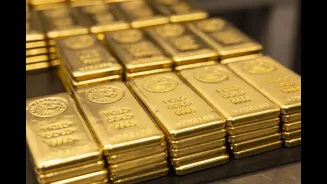
Gold prices surged to an all-time high on Monday (December 22), supported by expectations of further US Federal Reserve rate cuts, persistent safe-haven demand and a softer US dollar.
Spot gold climbed to a record $4,383.73 per ounce, extending its strong rally this year. The precious metal has gained about 67% in 2025, driven by geopolitical and trade tensions, aggressive central bank buying and growing confidence that global interest rates will trend lower.
Markets reacted after the US Federal Reserve delivered a quarter-point rate cut last week, reinforcing expectations of easier monetary policy ahead. Investors are now pricing in two US rate cuts in 2026, which has boosted the appeal of non-yielding assets such as gold.
A weaker dollar has also supported prices, as it makes gold cheaper for buyers using other currencies. The dollar index has remained under pressure amid expectations of prolonged monetary easing in the US.
In India, gold prices reflected the global rally. 24-carat gold traded at ₹13,417 per gram, while 22-carat gold stood at ₹12,299 per gram.
18-carat gold was priced at ₹10,063 per gram, according to market data.
In a note, YES Bank said gold’s sharp rise has exceeded earlier expectations, supported by changing macroeconomic conditions. The bank noted that in its July 2025 outlook, it had projected gold prices in the range of $3,600–3,800 per ounce by end-2025, at a time when prices were near $3,300 per ounce.
The earlier outlook was based on strong US labour markets and sticky inflation, which had raised doubts over the pace of Fed rate cuts. At that time, the Fed’s dot plot showed several policymakers favouring only one rate cut in 2025.
However, with additional rate cuts now expected, YES Bank said depreciation pressure on the dollar index (DXY) could persist, providing further support to gold prices.
The bank cautioned that potential dollar strength in the second half of 2026, driven by growth differentials between the US and Europe, could act as a headwind. It pointed to slower growth in Europe and delays in Germany’s fiscal spending plans as factors that may influence future European Central Bank policy decisions.
Despite these risks, elevated geopolitical uncertainty continues to keep risk premiums high. YES Bank noted that ongoing volatility has encouraged central banks to extend their gold purchases, creating a long-term tailwind for prices.
From a technical perspective, the bank sees gold prices extending towards $4,500–4,550 per ounce.
Spot gold climbed to a record $4,383.73 per ounce, extending its strong rally this year. The precious metal has gained about 67% in 2025, driven by geopolitical and trade tensions, aggressive central bank buying and growing confidence that global interest rates will trend lower.
Markets reacted after the US Federal Reserve delivered a quarter-point rate cut last week, reinforcing expectations of easier monetary policy ahead. Investors are now pricing in two US rate cuts in 2026, which has boosted the appeal of non-yielding assets such as gold.
A weaker dollar has also supported prices, as it makes gold cheaper for buyers using other currencies. The dollar index has remained under pressure amid expectations of prolonged monetary easing in the US.
In India, gold prices reflected the global rally. 24-carat gold traded at ₹13,417 per gram, while 22-carat gold stood at ₹12,299 per gram.
18-carat gold was priced at ₹10,063 per gram, according to market data.
In a note, YES Bank said gold’s sharp rise has exceeded earlier expectations, supported by changing macroeconomic conditions. The bank noted that in its July 2025 outlook, it had projected gold prices in the range of $3,600–3,800 per ounce by end-2025, at a time when prices were near $3,300 per ounce.
The earlier outlook was based on strong US labour markets and sticky inflation, which had raised doubts over the pace of Fed rate cuts. At that time, the Fed’s dot plot showed several policymakers favouring only one rate cut in 2025.
However, with additional rate cuts now expected, YES Bank said depreciation pressure on the dollar index (DXY) could persist, providing further support to gold prices.
The bank cautioned that potential dollar strength in the second half of 2026, driven by growth differentials between the US and Europe, could act as a headwind. It pointed to slower growth in Europe and delays in Germany’s fiscal spending plans as factors that may influence future European Central Bank policy decisions.
Despite these risks, elevated geopolitical uncertainty continues to keep risk premiums high. YES Bank noted that ongoing volatility has encouraged central banks to extend their gold purchases, creating a long-term tailwind for prices.
From a technical perspective, the bank sees gold prices extending towards $4,500–4,550 per ounce.