




What's Happening?
Trade groups and shipper associations, representing over 250 stakeholders including retailers, manufacturers, the National Association of Manufacturers, the National Retail Federation, the World Shipping
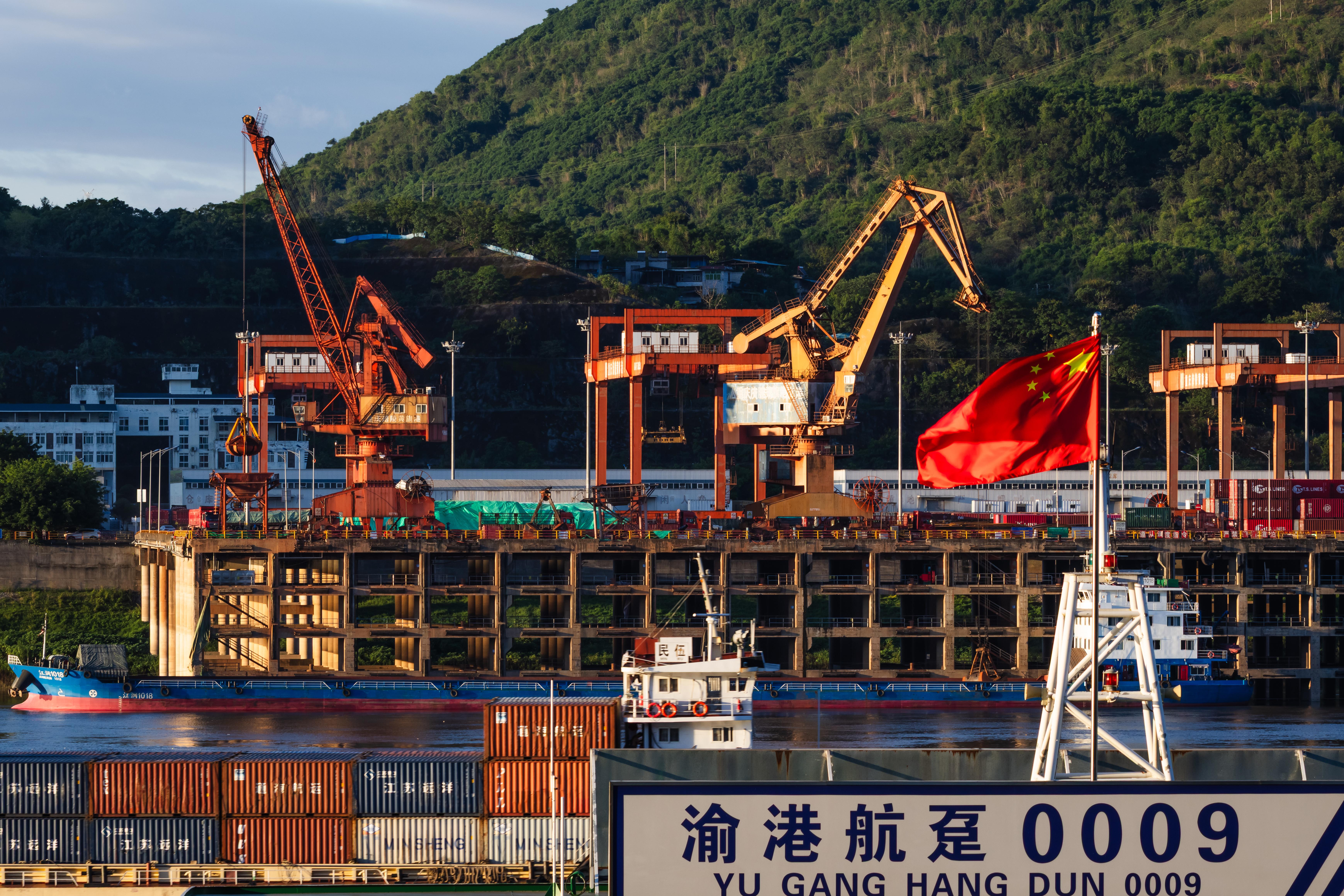
Council, and the U.S. Dairy Export Council, have formally urged U.S. Trade Representative Jamieson Greer to permanently suspend Section 301 fees on China-built or China-linked vessels. This appeal was made in an Oct. 30 letter to the agency. The fees, which range from $18 per ton to $120 per container, were initially paused for a year and are currently set to resume on January 9, 2027. The policy behind these fees aims to incentivize domestic shipbuilding by offering a three-year exemption to vessel owners who order new U.S.-built vessels. Stakeholders argue that the fees would impose an additional cost layer on an already strained transportation system and would not be limited to a narrow set of market participants due to China-built vessels representing a significant share of global ocean carrier capacity.
Why It's Important?
The potential re-imposition of Section 301 fees on China-linked vessels carries significant implications for the U.S. economy and its supply chains. Businesses, particularly those involved in retail and manufacturing, face increased operational costs, which could translate into higher prices for consumers. The fees are seen as a burden on shippers who have limited control over the origin of the vessels transporting their goods, adding uncertainty to their logistics planning. Furthermore, the groups contend that the fees have not proven to be an effective strategy for revitalizing the U.S. shipbuilding industry, citing challenges such as limited domestic capacity, workforce shortages, and a lack of competitive alternatives. Elevated ocean freight rates, already impacted by geopolitical events and tariffs, would be further exacerbated, potentially hindering economic recovery and growth.
What's Next?
The USTR had previously proposed extending the suspension of these fees until January 9, 2027, and solicited public comments, which were due by October 30. The letter from the trade groups serves as a direct response to this call for input, advocating for a permanent suspension. A continued or permanent pause on these fees would provide the USTR with additional time to engage in negotiations with China, coordinate with allies and partners, and develop policies that genuinely expand U.S. shipbuilding and maritime capabilities without immediately burdening American freight users. The decision by USTR Jamieson Greer will determine whether U.S. businesses face increased shipping costs or if a more strategic approach to bolstering domestic shipbuilding is pursued.
Beyond the Headlines
The debate over Section 301 fees on China-linked vessels highlights a broader tension between protectionist trade policies aimed at fostering domestic industries and the realities of globalized supply chains. While the intent to revive U.S. shipbuilding is clear, the practical impact of these fees on a complex, interconnected shipping industry raises questions about their efficacy and unintended consequences. The argument that fees alone are insufficient to address deep-seated issues like limited domestic capacity and workforce constraints suggests that a more comprehensive industrial policy might be needed. This situation also underscores the influence of powerful trade associations in shaping U.S. trade policy, as they advocate for measures that protect their members from additional costs and market disruptions.