




By Arathy Somasekhar
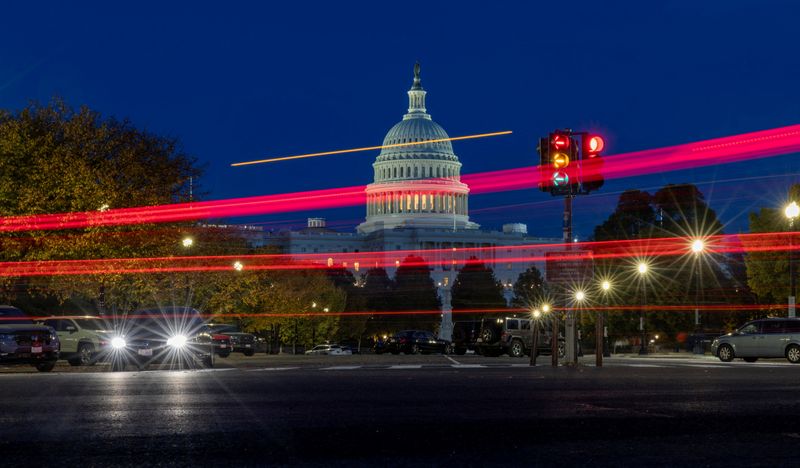
HOUSTON, Nov 4 (Reuters) - Oil prices fell 9% on Wednesday in volatile trading as investors awaited Washington's next move in the US-Israeli war with Iran after President Donald Trump's
Republican Party lost control of Congress in midterm elections.
Brent futures dropped $9.27, or 8.9%, to $94.29 a barrel, touching the lowest level since September 4, at 11:58 a.m. ET (1658 GMT). US West Texas Intermediate crude futures were down $7.44, or 7.8%, to $88.54.
Brent settled in the previous session at its lowest level in nearly four weeks as traders weighed talks to end wars in Ukraine and Iran.
"Larger crude oil exports out of the Middle East, along with President Trump stating he has no immediate plans to strike Iran, is keeping the pressure on crude oil prices for now. The Democratic control of Congress could also tighten US military spending in the Middle East and further heighten the possibility of a peace deal sooner than later," said Dennis Kissler, senior vice president of trading at US financial services firm BOK Financial.
Trump acknowledged that the Iran war had played a role in his party's sweeping defeat in the midterm elections, as Democrats won control of the House of Representatives and the Senate. Trump told the Financial Times on Tuesday that the United States had no immediate plans to strike Iran.
Iran's Supreme Leader Ayatollah Mojtaba Khamenei said in a written statement that US hostility would persist regardless of which party was in power. Yemen's Houthis said they had targeted King Khalid International Airport in Riyadh. There was no confirmation from Saudi authorities.
QATAR SEEKS TO AVOID ESCALATION
Qatar stepped up mediation efforts to avert an escalation of attacks after the US elections. A senior Iranian official told Reuters on Tuesday that Iran and the United States remain far from a deal to end their war.
"The elections are giving bears a reason to cast doubt on a continuation in Iran ... I'm more concerned that we can see an escalation in Iran sooner than a resolution," said Carl Larry, who leads the trading and North America risk team at Enverus.
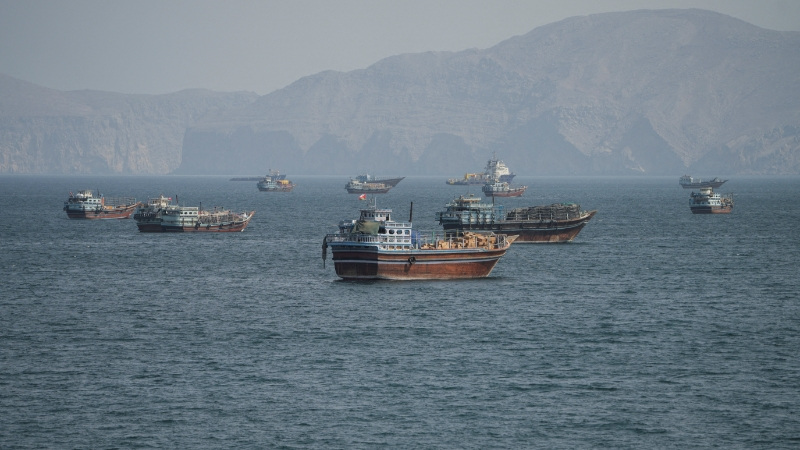
Gulf exports of crude, condensate and refined products, excluding liquefied petroleum gas, averaged 17.1 million barrels per day in October, according to ship-tracking data from Vortexa, down from 18.9 million bpd in September but still roughly three-quarters of pre-war levels.
The United Arab Emirates is considering a third oil-export pipeline that would deliver crude outside the Strait of Hormuz, Bloomberg reported, citing people familiar with the matter, as the country aims to sharply reduce its dependence on the waterway.
In the US, crude stocks, gasoline and distillate inventories fell last week, the Energy Information Administration said.
Crude inventories fell by 865,000 barrels to 409.8 million barrels in the week ended October 30, the EIA said, compared with analysts' expectations in a Reuters poll for an 877,000-barrel rise.
(Reporting by Arathy Somasekhar in Houston and Jeslyn Lerh in Singapore; additional reporting by Sam Li and Lewis Jackson in Beijing; editing by Louise Heavens, Jason Neely, Nia Williams, Rod Nickel)