


By Raphael Satter, Trevor Hunnicutt, Nandita Bose and Bo Erickson
WASHINGTON, Nov 17 (Reuters) - Technology outages that shut down email for many companies and grounded thousands of flights over the past
few days extended to the US National Security Agency on Tuesday, as President Donald Trump's administration downplayed concerns about a broader problem.
The NSA said its network experienced a "temporary degradation" during routine maintenance, but that "mission-critical capabilities" remained operational. The series of disruptions to critical systems, which also touched the banking system on Monday, prompted even some Trump allies to demand more information.
"If this is all a coincidence, it's like the greatest coincidence in the history of the world," US Senator Josh Hawley, a Missouri Republican, told reporters.
Trump earlier played down the incidents, which raised questions of whether the government and private sector had moved too quickly in cutting tech staff.
"It's like when you're big and powerful, and you have all the money. Things like that happen. It's fine," Trump told reporters in Manila, where he was attending the ASEAN economic conference.
DAILY DOWNTIME
Technology-related disruptions have hit every weekday since Thursday, when a Microsoft outage disrupted many of its services, including email.
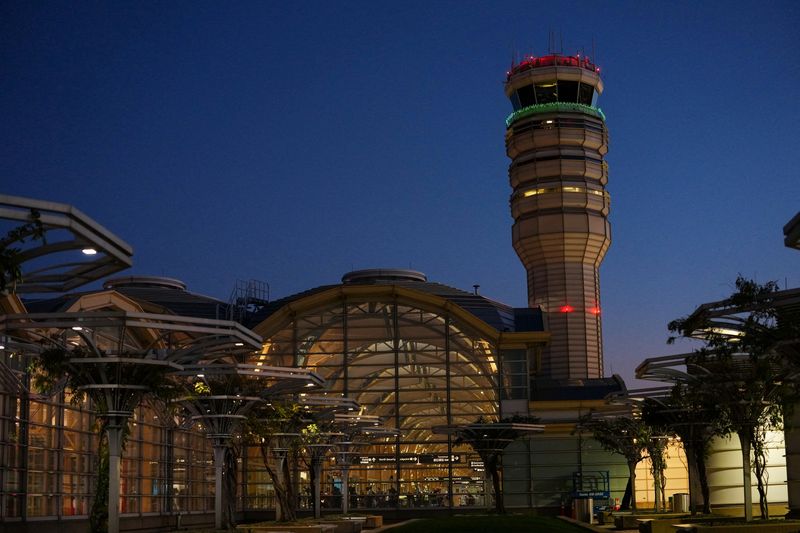
The next day, the Federal Aviation Administration called for a nationwide ground stop that lasted 4-1/2 hours, the longest halt to US air travel since the attacks of September 11, 2001.
The spate of outages included a United Airlines technology failure on Monday that delayed about 150 flights on the same day that a JPMorgan Chase software problem disrupted some banking services.
On Tuesday, Apple said it was working to restore its systems after an internal update caused an outage that affected customer services including iCloud and Apple Pay. The issue was not caused by a cyberattack, Apple said.
Insurance provider Marsh also said on Tuesday its clients reported 105 cyber incidents in the last two weeks of October — more than double the 48 recorded in the final two weeks of May.
Experts worry that AI tools are feeding a surge of cyberactivity, with cybersecurity companies regularly turning up examples of hackers using AI to launch scores of intrusions at once.
"The recent string of major disruptions across industries highlights how deeply interconnected our digital infrastructure has become, and how a single technical failure or software update can cascade with outsized effects across critical systems," said Cynthia Kaiser, a former senior FBI cyber official and current senior vice president of cybersecurity firm Halcyon's Ransomware Research Center.
The string of tech outages is likely due to issues emerging from system upgrades, US Director of National Intelligence Jay Clayton said in an interview with Fox Business on Tuesday.
"We do not see the indicia of a coordinated cyberattack ... And we do not see the indicia of state-sponsored activity here. And we can be fairly confident in that," Clayton said.
He attributed the NSA outage to patches deployed for a PHP vulnerability discovered using AI last month - a bug that could let hackers remotely take control of servers.
"Everybody recognizes it's time to upgrade their systems, and as they upgrade them, they're not coming back as expected in all cases, and in some cases, systems have to hand off to other systems, and those handoffs are not coming back as expected," Clayton told the "Claman Countdown" program on Fox Business.
OUTAGES FOLLOW LAYOFFS, WARNINGS
At many organizations — both private and government — the outages follow layoffs and, in some cases, explicit warnings about potential disruptions.
At the FAA, which was hit by Elon Musk-driven job cuts after Trump took office last year, Congress warned the agency's sped-up modernization effort was poorly organized and could trigger service outages. United Airlines said last year that AI advances had helped it cut management headcount by 4% and that it planned to cut by an additional 4% this year.
At Microsoft, the email outage came a month after the company said it was offering buyouts to a quarter of its global workforce, a move that follows previous headcount reductions.
While there is no evidence job losses at any of these places led to the disruptions, one tech labor organizer said cuts tended to make safety margins thinner.
"Part of the resilience of a system comes from people who are experienced with a system," said Liz Fong-Jones, who has worked for 20 years on software resilience issues.
Democratic US Senator Jack Reed of Rhode Island joined in calls for more information from the White House.
"Just the last few days, America has seen tech glitches all across the board," Reed told reporters. "The president has to get on top of it, explain to the American people what's going on, and do it quickly, and that is a mission that he is not doing at this moment."
(Reporting by Raphael Satter, Nandita Bose and Bo Erickson in Washington and Trevor Hunnicutt in Manila; Additional reporting by AJ Vicens in Detroit, Jarrett Renshaw in Washington and Bhargav Acharya in Toronto; Writing by Doina Chiacu and Daniel Trotta; Editing by Scott Malone, Jonathan Spicer, Rod Nickel and Jamie Freed)