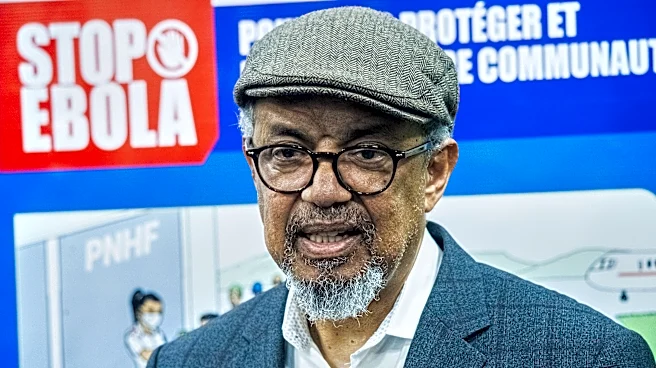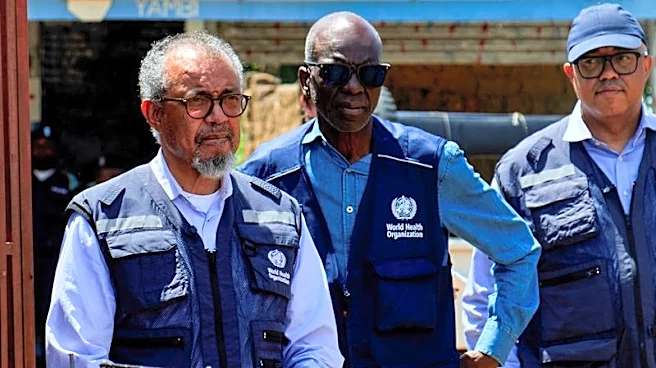


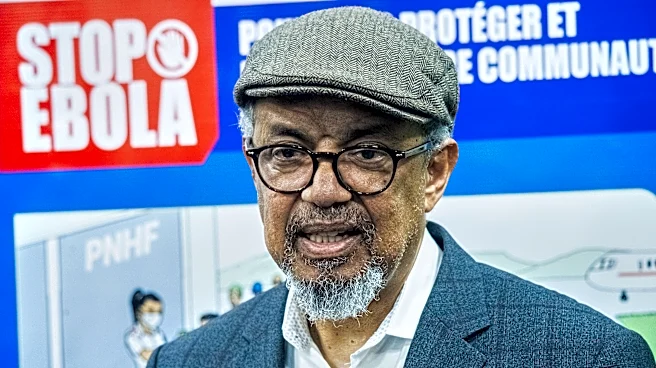
KINSHASA, June 1 (Reuters) - The head of the World Health Organization was due to meet with Democratic Republic of Congo's president on Monday to discuss the country's Ebola outbreak, which an aid agency warned was likely much larger than official figures reflect.
The outbreak, already the third-largest on record, persisted for weeks undetected, say health officials, who are now behind the curve and struggling to bring it under control.
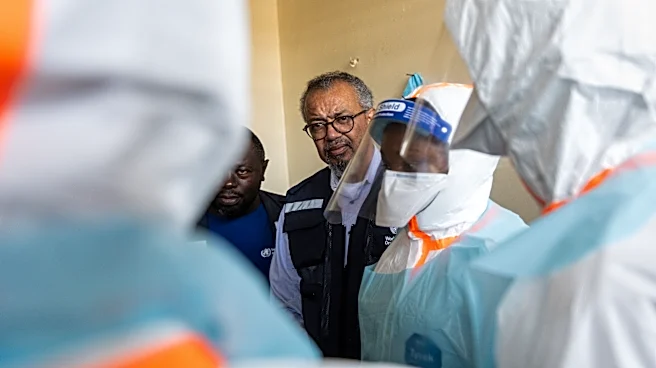
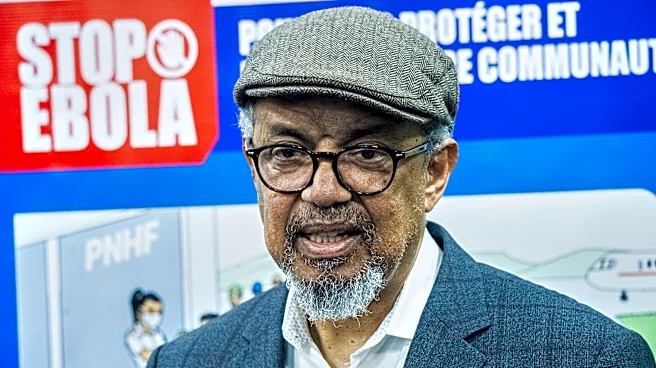
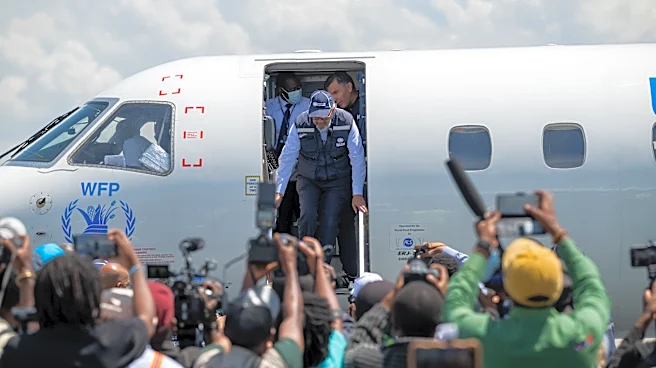
Arriving in Congo last week, WHO Director-General Tedros Adhanom
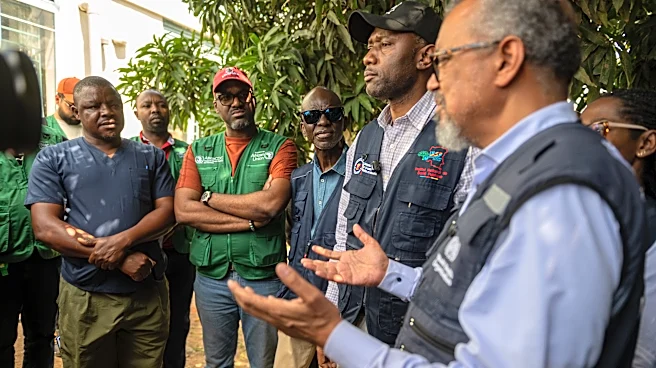
Ghebreyesus called for more international support to stop the disease's spread before he travelled to Congo's Ituri province where the first cases were confirmed.
In a joint statement on Sunday night, the WHO and the Congolese government acknowledged it was "a challenging time" and that they were working to improve surveillance, testing and care for patients. "Persistent challenges include early detection and isolation of cases, contact tracing, safe and dignified burials, robust infection prevention and control in health facilities, and strong community awareness," the statement said. After flying back to Congo's capital Kinshasa, Tedros was expected to meet with President Felix Tshisekedi at his residence before returning to Geneva, according to an official programme. OUTBREAK LIKELY LARGER THAN OFFICIAL FIGURES SHOW, IRC SAYS The WHO said on Friday there were 906 suspected cases of Ebola in Congo, including 223 suspected deaths under investigation. And Congo's government said late Sunday the number of confirmed cases had increased to 282, with 42 deaths, after 19 new positive test results were recorded. There have been 264 confirmed cases in Ituri province as well as 15 in North Kivu province and three in South Kivu province, according to data distributed by the communications ministry.
Ebola cases have also been confirmed in neighbouring Uganda.
The International Rescue Committee, however, warned on Monday that the outbreak was likely significantly larger and more advanced than official figures suggest.
The aid agency said the virus may have been spreading for up to three months before the first official cases were detected in mid-May. And with only 20% of contacts currently being traced, it said, health authorities are struggling to identify and isolate new chains of transmission.
"When four out of five contacts are not being traced, it becomes incredibly difficult to contain the outbreak or even understand its true scale," said Rachel Howard, IRC's senior technical emergency health advisor.
While Congolese officials are well-versed in fighting Ebola, they have little experience with the Bundibugyo strain of the virus, which is responsible for the current outbreak and for which there is no approved vaccine.
Global health organisation CEPI will give roughly $60 million to Moderna and two other groups to accelerate the development of shots against Ebola Bundibugyo. It told Reuters it was possible to get vaccines against the strain ready for trials within a couple of months.
And China said on Monday it would send a team of medical specialists to Congo to assist with the outbreak.
Four nurses, who were being treated, have meanwhile been discharged from a hospital in Bunia after recovering from the disease, the WHO said on Sunday.
(Reporting by Congo newsroom; Additional reporting by Olivia Le Poidevin Writing by Robbie Corey-Boulet; Editing by Joe Bavier)