




By Jonathan Stempel
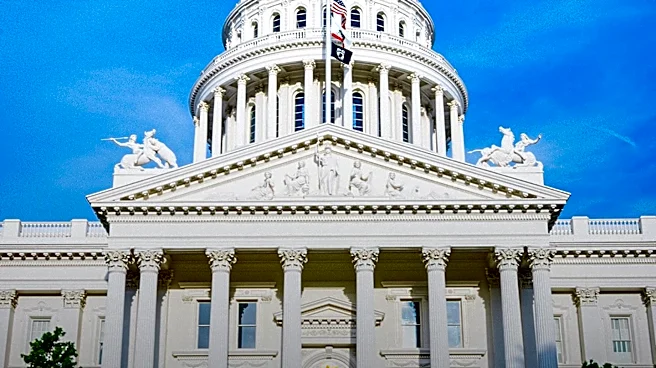
Nov 9 (Reuters) - A federal appeals court dealt a setback to California's desire to enforce its first-of-its-kind climate disclosure laws, blocking the state from requiring large companies to disclose climate-related financial risks and "indirect" greenhouse gas emissions.
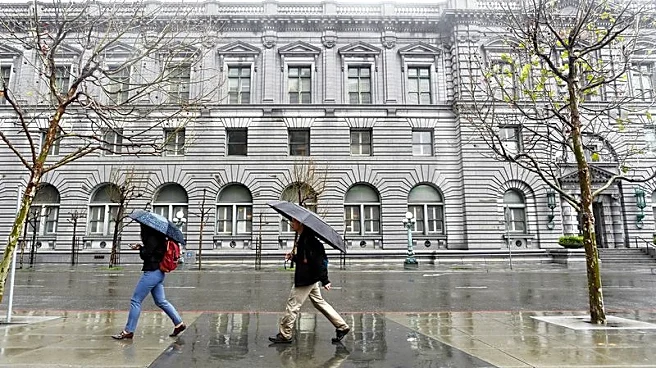
Monday's decision by a three-judge panel of the 9th US Circuit Court of Appeals in San Francisco is a partial victory for the US Chamber of Commerce, the American Farm Bureau Federation and several California
business groups that sued to block the two state laws.
The panel said California could enforce provisions of a second law requiring large companies to report their own greenhouse emissions, and emissions from energy they buy and consume.
Democratic Governor Gavin Newsom signed both laws in 2023, making California the first US state to require the disclosures. Opponents said the laws would impose massive costs on public and private businesses, and violated the free speech protections of the US Constitution's First Amendment.
Much of California is subject to events often associated with climate change, including wildfires, droughts, rising sea levels and temperatures well over 100 degrees Fahrenheit (38 degrees Celsius).
FIRST AMENDMENT LIMITS COMPELLED SPEECH
The appeals court unanimously said one law requiring companies with more than $500 million of annual revenue to biennially disclose climate-related risks would likely fail, because it forced companies to share "value-laden" judgments on a "politically fraught" subject rather than simply provide factual information.
It also said the other law requiring businesses with more than $1 billion of annual revenue to annually report emissions by suppliers, customers and others within their value chains went too far to address California's interests in helping investors, reducing emissions and preventing misleading speech.
The panel said the state could have instead disseminated existing disclosures to the public, or given companies incentives to make disclosures or reduce emissions on their own.
"Climate change will increasingly affect human activity in the years ahead, forcing social, economic, and political systems to adapt to changing environmental conditions," Circuit Judge Jacqueline Nguyen, an appointee of former Democratic President Barack Obama, wrote for the court. "The First Amendment, however, limits the government’s ability to compel speech."
Defendants included officials of the California Air Resources Board and California Attorney General Rob Bonta, who enforces the state's laws. Neither office immediately responded to requests for comment.
Daryl Joseffer, president of the US Chamber Litigation Center, in a statement called the decision an "important victory" that halted the "most onerous" disclosure requirements. He said the Chamber of Commerce will seek permanent injunctions.
TRUMP APPOINTEE PARTIALLY DISSENTS
Monday's decision blocked California from enforcing the Climate-Related Financial Risk Act and part of the Climate Corporate Data Accountability Act, known respectively as Senate Bill 261 and Senate Bill 253.
It returned the case to US District Judge Otis Wright in Los Angeles, who had let California enforce both laws. The appeals court had last November stayed enforcement pending appeal of the financial risk law.
Circuit Judge Mark Bennett, an appointee of Republican President Donald Trump, partially dissented from Monday's decision and would have blocked both laws.
The panel also included US District Judge Kiyo Matsumoto, an appointee of former Republican President George W. Bush who normally sits in Brooklyn, New York.
(Reporting by Jonathan Stempel in New York, Editing by Alexia Garamfalvi)