



By Anushree Mukherjee
Aug 26 (Reuters) - Oil prices fell more than 2% on Wednesday to their lowest level in more than two weeks, as progress in talks between Iran and Oman raised expectations the Strait of Hormuz could reopen, easing shipping disruptions in a key oil-exporting region.
Brent crude futures were down $2.23, or 2.52%, to $86.35 a barrel at 1218 GMT. West Texas Intermediate crude futures were down $1.97, or 2.39%, at $80.39.
Both benchmarks fell to their lowest levels since August 10 earlier
in the session.
"It's renewed focus on the discussion between Iran and Oman regarding a deal for transiting oil and other petrochemicals through the Strait of Hormuz. So that sort of creates some optimism," said Bjarne Schieldrop, chief analyst, commodities, at SEB Research.
Iran and Oman have reached agreements on their share of the Strait of Hormuz and its revenues, Iran's Revolutionary Guards spokesperson said, according to a report by the semi-official Tasnim news agency on Wednesday.
The spokesperson said the U.S. was obstructing negotiations between Oman and Iran, leading to them being delayed.
"The market has moved from pricing a high probability of prolonged disruption and renewed escalation towards pricing partial reopening, negotiated shipping arrangements and a lower risk of renewed military confrontation," said Saxo Bank head of commodity strategy Ole Hansen.
"A credible agreement that rapidly restores Hormuz traffic could remove another layer of geopolitical premium."
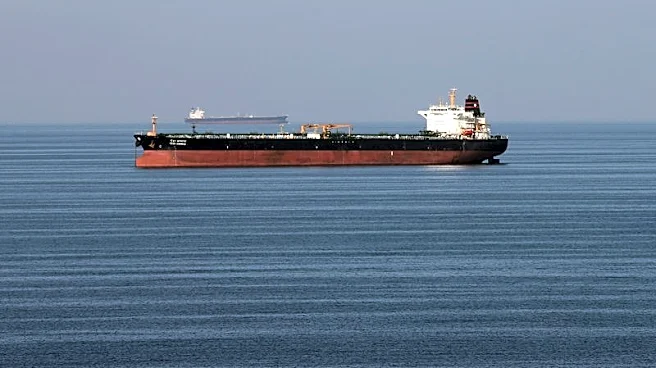
Traffic through the strait remains subdued while talks continue. Only five commodity vessels transited the waterway on Tuesday, preliminary data from shiptracker Kpler showed, down from the 10-day average of 15 and well below pre-war levels.
Two supertankers carrying 4 million barrels of Saudi crude are heading to China after loading cargoes through ship-to-ship transfers off Oman, shipping data showed on Wednesday.
Efforts to reach a broader settlement to the conflict are also continuing. Pakistan and Iran made "significant progress" in talks focused on the U.S.-Israeli war on Iran and prospects for peace, Pakistan's interior minister said on Tuesday at the end of a visit to Tehran.
On Monday, Washington expanded sanctions aimed at squeezing Iran's economy and warned it could penalise countries that continue doing business with Tehran, though it said penalties would not be imposed immediately.
(Reporting by Anushree Mukherjee in Bengaluru, Yuka Obayashi in Tokyo and Siyi Liu in Singapore. Editing by Elaine Hardcastle and Mark Potter)