

BEIJING, Dec 31 (Reuters) - China's manufacturing activity unexpectedly grew in December, snapping eight straight months of decline, giving policymakers some confidence as they raced to meet their economic growth target for the year.
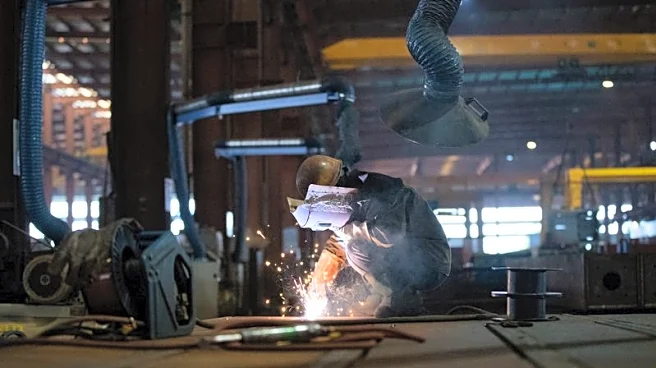
The manufacturing purchasing managers' index (PMI) rose to 50.1 in December from 49.2 in November, the National Bureau of Statistics' survey showed on Wednesday, above the 50-point mark separating growth from contraction. It beat analysts' forecast of 49.2 in a Reuters
poll.
The data should give policymakers cause for optimism after choosing to see out the year without major additional stimulus to meet the full-year growth target of around 5%.
Sub-indexes of new orders and new export orders rose to 50.8 from November's 49.2 reading and 49.0 from 47.6 reading, respectively, after last month's export figure topped forecasts.
The non-manufacturing PMI, which includes services and construction, was at 50.2, after shrinking in November for the first time in nearly three years.
In separate data released last week, Chinese industrial firms saw their profits falling 13.1% year-on-year in November, the steepest drop in over a year, as sluggish global demand weighed on the export-oriented economy.
At an agenda-setting gathering in early December, the Communist Party leadership promised to boost income and stimulate consumption, although similar pledges in the past have struggled to deliver results.
Chinese consumers have so far been reluctant to spend, held back by an uncertain employment outlook and as a prolonged property crisis drains household wealth.
Beijing's policymakers have come to recognise the need to rebalance the economy and transform its production-driven model as tensions with key export markets mount.
"The country's economic development still faces many old problems and new challenges; the impact of changes in the external environment is deepening, and the contradiction between strong supply and weak demand is prominent domestically," the readout of the Central Economic Work Conference said.
In an article published by the flagship party magazine Qiushi Journal in mid-December, President Xi Jinping said there was "overall capacity excess", which meant "ultimately consumption is the sustainable driver of economic growth."
Beijing had previously rejected "overcapacity" as unfair criticism by Western governments.
Authorities have also vowed this year to crack down on price wars, prune production in some sectors and step up so-called "anti-involution" efforts.
The NBS composite PMI of manufacturing and non-manufacturing was 50.7 in December, compared with November's 49.7.
(Reporting by Joe Cash and Xiuhao Chen; Editing by Sam Holmes)