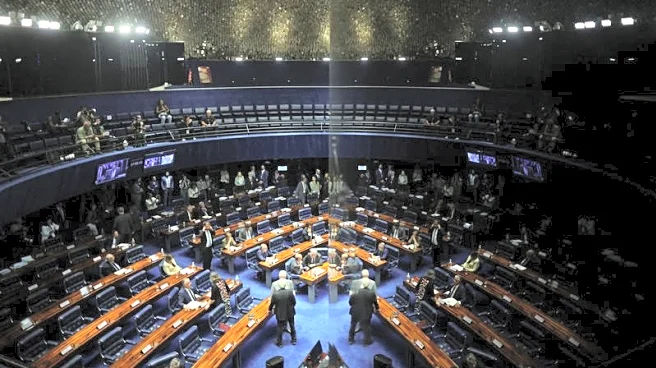

BRASILIA, Dec 17 (Reuters) - Brazil's Senate approved on Wednesday a bill to shorten the 27-year prison sentence of former President Jair Bolsonaro, although it is likely to face resistance from the Supreme
Court and President Luiz Inacio Lula da Silva.
The bill was approved by the lower house last week and now goes to Lula, who has not said whether he will sign it into law or veto it. It could cut the former president's prison term to just over two years.
The text also establishes sentence reductions for those convicted for their roles in a January 2023 riot, when Bolsonaro supporters invaded and ransacked the presidential palace, Supreme Court and Congress.
"This is part of our path to peace, and we must all celebrate it," said Senator Esperidiao Amin, the bill's sponsor in the Senate, following its approval in a 48-25 vote.
Last month, Bolsonaro began serving his sentence for plotting a coup against Lula after losing the 2022 election.
A preliminary version of the bill put forward by opposition right-wing lawmakers would have pardoned those involved in "political demonstrations" after Lula's election, but the bill's sponsor in the lower house ruled out granting them full amnesty.
About 2,000 people were arrested over the Brasilia attack, which drew comparisons to the January 2021 attack on the U.S. Capitol in Washington. Many of those in Brazil have been convicted by the Supreme Court of attempting a coup, among other crimes.
"The government is against this proposal... for reasons that are already known: those who have attacked democracy must pay for their crimes," Institutional Relations Minister Gleisi Hoffmann said in a post on X ahead of the vote.
Lula previously said that he would wait for the bill to "get to his desk" before a decision on whether to sign it into law, adding he would take "the best decision for Brazil."
The bill was amended during an earlier vote on Wednesday in a Senate committee to make it clear that sentence reductions will only apply to those involved in acts related to the attempted coup, and not to other crimes.
Amin argued that the change did not force the bill to return to the lower house, as it was a simple adjustment to the wording.
(Reporting by Maria Carolina Marcello, additional reporting and writing by Fernando Cardoso; Editing by Natalia Siniawski and Kylie Madry)