
April 23 (Reuters) - The outlook for European corporate earnings has slightly improved, with most companies set to report slight profit growth for the first quarter, the latest LSEG I/B/E/S forecasts showed
on Thursday, although a fragile detente in the Middle East presents risks.
European blue-chips, excluding energy majors, are expected to report a 0.4% increase in first-quarter earnings on average, slightly better than the 0.3% gain analysts expected a week ago.
On the other hand, revenues for large non-energy companies are expected to fall 0.9% on average. Declining revenues and growing profits could be a sign that companies' efforts to cut costs and restructure businesses are paying off.
• Earnings of companies included in Europe's benchmark STOXX 600 index are expected to rise by 3.2%, though the average is skewed by the energy sector, which is forecast to deliver 27% growth
• Oil and gas companies have benefited from higher crude prices due to the war in the Middle East
• The forecast contrasts with pre-war estimates: energy majors' first-quarter profits were expected to fall 2.0% as of February 26
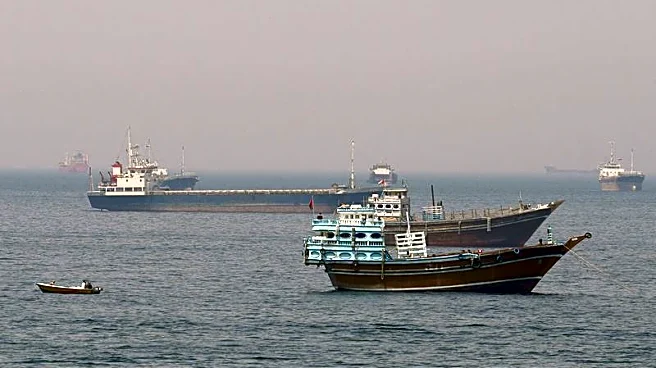
• Crude futures are about 45% higher than before the war that began in late February, as peace talks between Iran and the U.S. have stalled and amid continued restrictions on trade through the Strait of Hormuz
• Earnings of real estate companies and utilities are expected to fall by 15.4% and 13.6%, respectively, according to the I/B/E/S report
• Investors will closely watch results of more than 80 companies next week to see how they expect to navigate the year
• Nestle beat first-quarter sales forecasts and stuck to its annual outlook on Thursday, saying it had so far seen "very little impact" from the war in the Middle East on its global business
• However, British supermarket group Sainsbury's warned that uncertainty is clouding its outlook and could drag profits lower this year, echoing concerns voiced by market leader Tesco
• LVMH's CEO Bernard Arnault told investors the luxury goods group would return to growth if the conflict gets resolved quickly, but warned that if it spiralled into a "global catastrophe" it was impossible to predict the outcome
(Reporting by Javi West Larrañaga; Editing by Milla Nissi-Prussak and Susan Fenton)