






By Lucy Craymer and Renju Jose
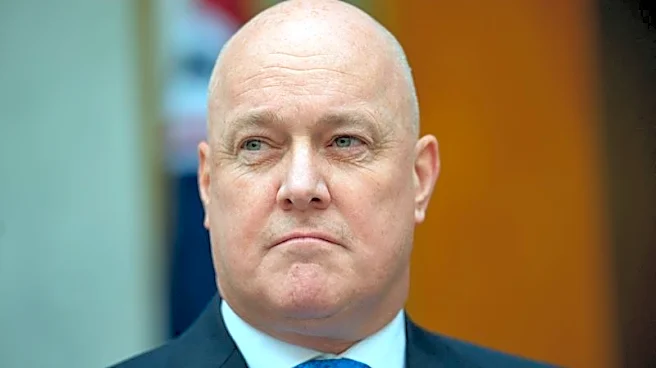
WELLINGTON, May 13 (Reuters) - New Zealand will keep a tight rein on day-to-day spending in this year's budget while increasing capital investment to strengthen infrastructure, defence and energy resilience, Prime Minister Christopher Luxon said in a pre-Budget speech on Wednesday.
The budget strategy reflects a recalibration by the government, focusing on restoring the public finances while boosting investment in critical assets, as policymakers respond to a sluggish
economy and aging infrastructure at home and rising geopolitical and security risks abroad.
The net operating package in Budget 2026 would be NZ$2.1 billion ($1.25 billion), around NZ$300 million below the NZ$2.4 billion allowance earmarked in December, Luxon said, as the government seeks to return to an operating surplus excluding the state accident insurer by 2028/29.
But he said the capital package would be larger than originally planned, at a net NZ$5.7 billion, reflecting the need to invest in infrastructure, defence, schools and hospitals as New Zealand faces a more volatile global environment.
"Fiscal repair balanced with careful capital investment features heavily" in the budget, Luxon said, adding the government remained committed to putting debt on a downward path toward 40% of gross domestic product.
The centre-right National-led government has made spending restraint and fiscal discipline core to its agenda since taking office, with Luxon highlighting a third straight year of savings across agencies alongside continued investment in health and education.
New Zealand's economy remains weak after a prolonged period of high interest rates, soft household demand and pressure on public finances. Luxon said crises offshore had made the path back to surplus harder.
The speech, officially billed as a pre-Budget address, ranged widely from defence to immigration and New Zealand's place in an increasingly unstable world.
Luxon said New Zealand could no longer rely on geography, alliances or renewable energy alone to shield it from global shocks, and reaffirmed plans to nearly double defence spending to 2% of GDP.
"We can't have prosperity — more jobs, more exports, and higher wages — without security," he said. He noted the world was moving from a world ordered by rules to one ordered by power.
“The United States, which supported the global order for 80 years, is now focusing more exclusively on its own view of its own interests. America First,” he said.
The prime minister framed the domestic policy push within a shifting global landscape, warning the world was moving away from a rules-based order toward one defined by power, security competition and national resilience.
"As a small, trading nation, we are disproportionately exposed," he said.
($1 = 1.6798 New Zealand dollars)
(Reporting by Lucy Craymer in Wellington and Renju Jose in Sydney; Editing by Christian Schmollinger and Shri Navaratnam)