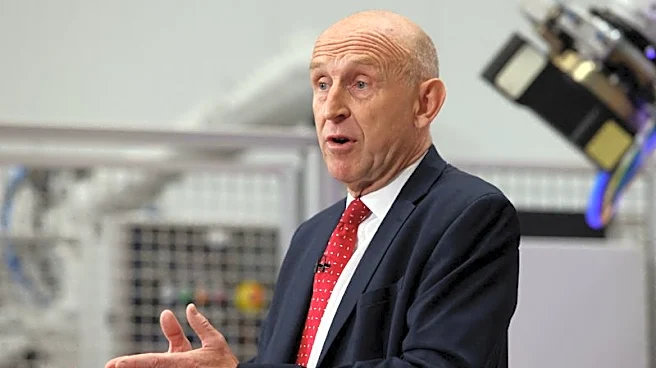







LIVERPOOL, England, Sept 28 (Reuters) - British finance minister John Healey will put his support firmly behind firms investing in defence on Monday, part of what he will describe as a new industrialisation drive to try to spur the nation's anaemic economic growth.
In his first speech to the governing Labour Party's annual conference as finance minister, Healey will aim to put flesh on the bones of Prime Minister Andy Burnham's pledge to reindustrialise Britain when he became the nation's seventh
leader in a decade in July.
Healey, who resigned as defence minister under former Prime Minister Keir Starmer over what he felt was inadequate spending on defence, will say a "new age of industrialisation" will see British firms deliver multi-billion pound defence projects, such as three new floating docks for submarines in Clyde in Scotland.
"By backing British shipyards, we are not only boosting national security but also securing resilience in the industries that will drive growth today while building the capabilities the country needs for the future," Healey said in a statement.
Burnham has pledged to meet a NATO target of increasing the core defence budget to 3.5% of GDP by 2035.
BURNHAM WANTS REINDUSTRIALISATION TO CREATE JOBS
The announcement is a taste of what Healey hopes to signal with his speech — that Burnham's government hopes the route to boosting growth and reducing unemployment, and the welfare bill, will stem from new jobs created by investments in sectors such as defence.
At a conference aimed at firing up Labour members and lawmakers with a message of hope, the new government also has a difficult task in navigating competing pressures — Burnham has promised to offer the public breathing space from cost-of-living pressures, but there is a cost to that.
With conflict in the Middle East impacting energy costs and government finances tight ahead of Healey's first budget on October 28, Britain's new finance minister has little room to manoeuvre.
On defence, his government also faces the need to fill a £4.7 billion ($6.2 billion) gap in its Defence Investment Plan, a blueprint some military experts say does not go far enough in meeting Britain's promise to increase defence spending.
Healey has as yet not set out whether the government will reach defence spending of 3% of GDP by 2030 — a target he wanted but failed to persuade Starmer to sign up to, part of the reason he quit as defence minister.
Burnham's new defence minister Wes Streeting said defence would drive Britain's reindustrialisation.
"Defence spending should make Britain stronger in every sense," Streeting said. "That means backing British by buying British wherever our industry can deliver." ($1 = 0.7548 pounds)
(Reporting by Alistair Smout and Elizabeth Piper; Editing by Jan Harvey)