





By David Shepardson
WASHINGTON, Oct 15 (Reuters) - The FBI and US Postal Service's law enforcement arm said on Thursday they were investigating suspicious mailings, including some sent to state election officials and lawmakers' offices ahead of the November 3 midterm elections.
The FBI said some of the letters contained an unknown substance.
A spokesperson for Senator Alex Padilla, a California Democrat, said his office received a notification from the FBI that the US Postal Service intercepted a letter
containing a suspicious substance mailed to one of Padilla's offices.
Brendan Donahue, a deputy chief inspector with the US Postal Inspection Service, said some of the letters had been intercepted and that an investigation was ongoing.
"We are committed to protecting our nation's election officials from threatening and dangerous mail. Any threat or attack on an election official is unacceptable," Donahue told reporters.
The National Association of Secretaries of State and the National Association of State Election Directors said late on Wednesday a series of suspicious letters was sent to state election offices.
The US House of Representatives sergeant at arms, the House's chief law enforcement officer, told staff in an email seen by Reuters that some letters containing suspicious white powder substances were received by public officials.
Earlier on Thursday, US Postmaster General David Steiner said USPS was "absolutely ready" to handle millions of ballots for the midterm elections that will determine control of the US Congress and other key races.
POSTAL SERVICE PLANS NEW MEASURES
The Postal Service said this month it would take "extraordinary measures" for the 2026 election, including extending hours at some retail locations and expediting handling, extra deliveries and special pickups of ballots.
The extraordinary measures start October 24 "to expedite completed ballots to election offices during the final stretch of the election season," Steiner said, adding they include "local turnaround to bypass all processing when it's absolutely necessary to get ballots on time."
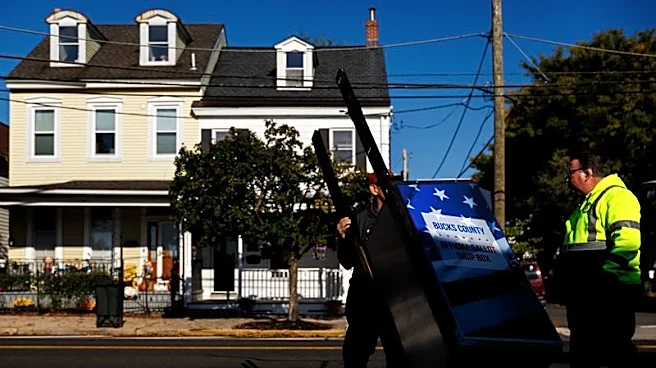
On September 14, the US Supreme Court declined to let USPS enforce a rule targeting mail-in ballots, dealing a setback to President Donald Trump's effort to restrict voting by mail. USPS said it would not enforce the rule under the order.
The agency adopted the measure after Trump issued a March executive order aimed at tightening rules governing mail voting.
In 2024, USPS delivered 99.2 million ballots to and from voters in the presidential election. About 30% of votes were cast by mail in the November 2024 presidential election, down from 46% in 2020.
Trump's fellow Republicans are locked in a tight battle to retain control of Congress in the midterms. Restricting mail-in ballots would benefit Republicans because Democratic voters disproportionately use mail-in ballots, according to various surveys.
Under the rule that was blocked, states would have had to provide lists of mail-ballot recipients to USPS and use agency-approved outbound and return ballot mail envelopes outfitted with unique barcodes. The Postal Service could then have refused to send out ballots that did not comply or were associated with voters not appearing on the lists.
(Reporting by David Shepardson; Editing by Hugh Lawson and Rod Nickel)