



By Avinash P and Purvi Agarwal
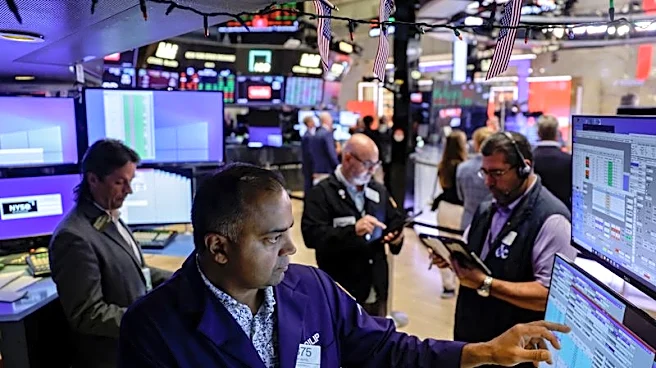
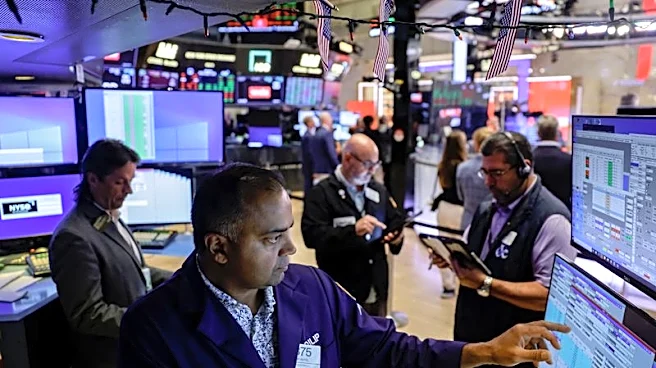
Aug 11 (Reuters) - Wall Street's main indexes slipped on Tuesday, as losses in tech stocks weighed on sentiment, while investors assessed reports of potential deals that could take the Middle East towards stability.
Pakistani defence minister Khawaja Asif told Bloomberg News that recent signals indicated the United States and Iran were close to "some sort of an arrangement." This was soon after Qatar's foreign ministry said Iran and Oman were in advanced talks about shipping
in the Strait of Hormuz.
"Markets are grappling with the prospects of some form of detente, although they're misguided in thinking that any form of resolution is the last chapter of this story," said Ron Albahary, chief investment officer at LNW.
Brent crude futures were held near one-week highs in choppy trading. The S&P 500 energy sector gained 1.1% — the most among peers.
In the market, alternative asset managers rose, with Apollo Global, and Blackstone adding between 4% and 6%.
Analysts linked the moves to an agreement these institutions signed with Nvidia on Monday to establish compute-financing platforms aimed at mobilizing more than $500 billion. Nvidia ticked up 0.4% in afternoon trading.
The S&P 500 financials index was up 0.2%. Industrials, regarded as traditionally cyclical, rose 0.7%.
However, Alphabet's 3% decline weighed on the S&P 500 communication services sector, also the biggest drag on the tech-heavy Nasdaq.
At 12:12 p.m. ET, the Dow Jones Industrial Average fell 57.41 points, or 0.11%, to 53,918.57; the S&P 500 lost 8.70 points, or 0.11%, to 7,744.41 and the Nasdaq Composite declined 92.60 points, or 0.35%, to 26,512.75.
The S&P 500 and the Dow hovered near all-time highs hit last week, while the Nasdaq is over 2% away from its record but well above its lows in July, when the tech-heavy index slid almost 10% from its peak.
Consumer and producer price inflation readings, due over the next two days, will be crucial in shaping market expectations on the Federal Reserve's policy path — given its focus on the inflation mandate and Chair Kevin Warsh's stance on cutting back rates guidance.
Markets were expected to trade directionless ahead of the prints, Albahary said.
Whether the U.S. central bank would increase interest rates in September or choose to pause has split traders almost evenly, according to the CME FedWatch Tool.
Rising energy costs, stemming from the Iran conflict, have spurred inflation concerns and complicated the paths of central banks globally.
Strong quarterly earnings in several sectors have, however, boosted U.S. stocks to new highs. Signs of AI-related spending paying off have also eased some jitters.
Jabil added 4.5% on Tuesday after UBS upgraded the electronics firm's stock to "buy" from "neutral".
Rocket Lab slipped 1.6% after appearing to push back the timeline for the first flight of its Neutron rocket.
U.S.-listed shares of On dropped over 19% after the sportswear brand missed sales estimates.
LNG company Venture Global slipped about 6% after its second-quarter revenue slightly missed estimates.
Advancing issues outnumbered decliners by a 1.52-to-1 ratio on the NYSE and by a 1.38-to-1 ratio on the Nasdaq. The S&P 500 posted 17 new 52-week highs and one new low while the Nasdaq Composite recorded 79 new highs and 63 new lows.
(Reporting by Avinash P and Purvi Agarwal in Bengaluru; Editing by Joyjeet Das)