




By Jan Wolfe
May 11 (Reuters) - A historic preservation group on Monday filed a lawsuit seeking to halt President Donald Trump's ongoing renovation to the Lincoln Memorial's reflecting pool, the latest in a string of court challenges to the former real estate developer's efforts to remake Washington landmarks.
The lawsuit, filed by the Cultural Landscape Foundation, alleged the renovation violates the National Historic Preservation Act, a law passed by Congress in 1996 that outlines procedures for
changes to historic properties.
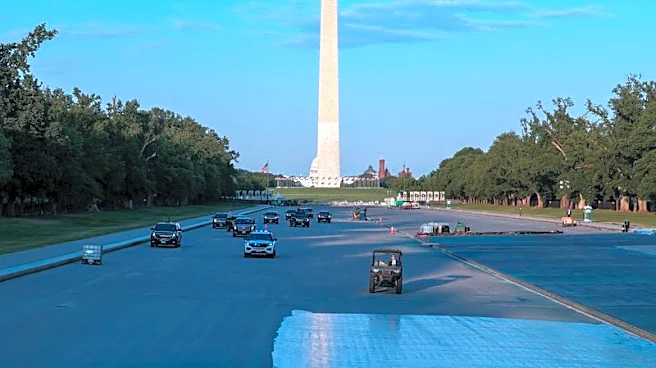
The nonprofit seeks an emergency order halting the Trump administration's overhaul, which focuses on replacing the pool’s “gray stone” appearance with an industrial-strength coating in the color of a blue swimming pool.
“The dark grey, achromatic basin was not incidental to the design," the lawsuit stated. "It was the design."
The case was brought against the Department of the Interior, the executive agency overseeing the renovation, which said in a statement that Trump "has done more to make our nation's capital a shining beacon than any other president in the history of this country."
Trump announced the project last month, saying "it’s going to be fantastic" and "really beautiful." As the project got underway, Trump’s motorcade took an unannounced trip to see the project up close.
Trump has said he was motivated to oversee the renovation after a friend visiting from Germany criticized the condition of the reflecting pool.
“He said, ‘It’s filthy, dirty. The water is disgusting-looking. It’s not representative of the country,’” Trump told reporters at a White House event last month.
Some of the president’s other projects in Washington, including renovations to the city’s golf courses and construction of a White House ballroom, have also drawn legal challenges.
A federal judge on March 31 blocked above-ground construction of Trump's ballroom, writing that "unless and until Congress blesses this project through statutory authorization, construction has to stop!"
An appeals court later lifted the injunction, allowing construction of the ballroom to proceed while litigation continues.
(Reporting by Jan Wolfe in Washington; Editing by Matthew Lewis)