




By Andrew Goudsward
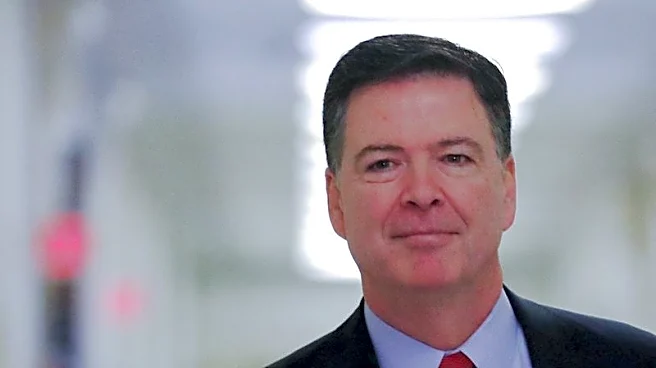
RICHMOND, Virginia, Sept 15 (Reuters) - A U.S. appeals court on Tuesday appeared wary of the Justice Department’s bid to revive criminal cases against two of President Donald Trump's longtime adversaries, former FBI Director James Comey and New York Attorney General Letitia James.
The prosecutions of Comey and James, which a judge dismissed last year, were among the most high-profile instances of the Trump administration using federal law enforcement to target perceived political
enemies and generated upheaval inside the Justice Department.
But the arguments on Tuesday at the Richmond, Virginia-based 4th U.S. Circuit Court of Appeals focused on the narrower issue of whether former Attorney General Pam Bondi had the authority to appoint Trump ally Lindsey Halligan as interim U.S. Attorney for the Eastern District of Virginia to prosecute the cases.
Two of the three judges on the panel expressed skepticism that federal law authorized Halligan's appointment and empowered her to secure both indictments.
Chief U.S. Circuit Judge Albert Diaz said the Trump administration's interpretation of the law would allow the DOJ to make a "limitless" number of interim appointments for U.S. Attorneys, evading the Senate's authority to approve top federal prosecutors.
"How can that possibly be?" Diaz, an appointee of Democratic President Barack Obama, asked.
Justice Department lawyer Henry Whitaker said that while the law may give the government that authority, in practice it would not make sense for the department to rely on an "endless stream" of temporary officials.
Circuit Judge Henry Floyd questioned whether the Justice Department's view would allow a typical "man on the street" to walk into a grand jury to secure a criminal indictment.
The dispute arises from the circumstances of Halligan's September 2025 appointment as interim U.S. Attorney after her predecessor, Eric Siebert, was ousted after expressing a reluctance to charge both Comey and James.
Siebert had previously served a 120-day interim stint, and U.S. District Judge Cameron McGowan Currie concluded that Bondi did not have the authority to make another temporary appointment. Currie determined that both cases had to be tossed because Halligan, a former personal lawyer to Trump with no prior prosecutorial experience, secured both indictments by herself.
Comey has since been charged in a separate federal case accusing him of threatening Trump in a social media post showing seashells on a beach arranged to form the numbers "86-47." That case is continuing.
LEGAL ARGUMENTS OVER APPOINTMENT AUTHORITY
Whitaker urged the appeals court to reject Currie’s interpretation of the appointments law, arguing it would wrongly limit the attorney general’s ability to name interim U.S. Attorneys to lead 94 federal prosecutors' offices across the U.S.
Ephraim McDowell, a lawyer for Comey, warned that the DOJ's view would allow the president to indefinitely "install political allies as chief federal prosecutors."
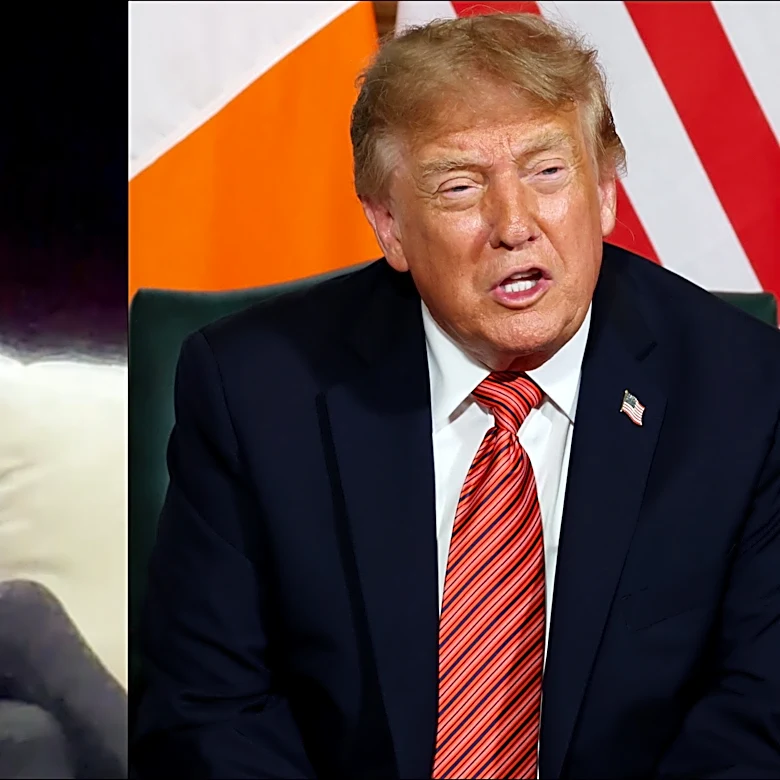
The cases against James and Comey were brought after Trump mentioned both by name in a September 2025 social media post demanding that Bondi, who was then attorney general, take action against his adversaries.
TRUMP'S HISTORY WITH COMEY AND JAMES
Trump fired Comey as FBI director during his first term as Comey was overseeing an investigation into potential ties between Trump’s 2016 presidential campaign and Russia. James successfully sued Trump and his family business for fraud following his first term.
The indictment against Comey accused him of lying to Congress about authorizing leaks to the news media. James was charged with bank fraud for allegedly misrepresenting her use of a Virginia home.
Both denied wrongdoing and alleged they were targeted with vindictive prosecutions as part of a Trump retribution campaign.
(Reporting by Andrew Goudsward in Richmond, Virginia; Editing by Matthew Lewis and Alistair Bell)