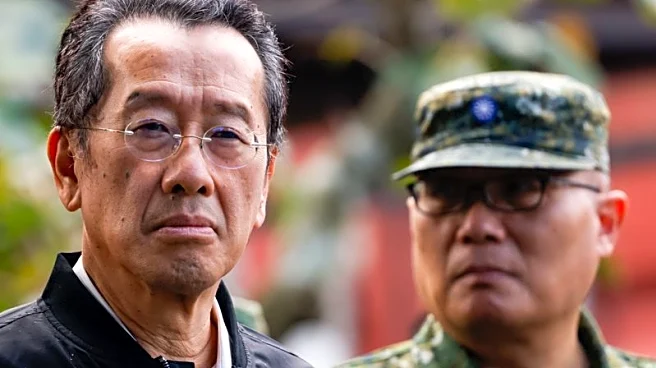


TAIPEI, March 26 (Reuters) - Taiwan Defence Minister Wellington Koo on Thursday indicated the next arms sale package from the United States is on track after the government received a letter of guarantee from Washington, even as the U.S. and Chinese leaders prepare to meet in May.
A major U.S. arms package for Taiwan worth about $14 billion that includes advanced interceptor missiles is ready for U.S. President Donald Trump's approval and could be signed after his upcoming trip to China, Reuters reported
this month, citing sources briefed on the discussion.
But Trump has postponed that trip, originally scheduled for early April, due to the Iran war, and is now due in Beijing May 14-15.
Taiwan, which China views as its own territory, is sure to be a topic, especially after Chinese President Xi Jinping told Trump in a call last month that the U.S. must "carefully" handle arms sales to the democratically-governed island.
Asked by reporters at parliament whether the Trump-Xi meeting would impact U.S. arms sales, Koo said the government had already received a letter of guarantee indicating the U.S. is willing to authorise the next deal.
"We have also been in close communication with the U.S. Department of War's Defense Security Cooperation Agency regarding its willingness to provide this to us, including guidance concerning the items, the amount, and the transaction," he added, without offering details.
The package is still undergoing an internal U.S. review and Taiwan has not received any notification about delays, Koo said.
The U.S. State Department, which generally handles queries about government policy towards Taiwan, did not immediately respond to a request for comment.
China has repeatedly demanded Washington end arms sales to Taipei, the last of which in December was worth $11 billion, the largest ever for Taiwan.
The U.S. is Taiwan's most important international backer and weapons supplier, despite the lack of formal diplomatic ties, and is bound by law to provide the island with the means to defend itself.
Taiwan has faced stepped up Chinese military pressure in recent years, including war games.
(Reporting by Ben Blanchard; Editing by Michael Perry)