
By Humeyra Pamuk
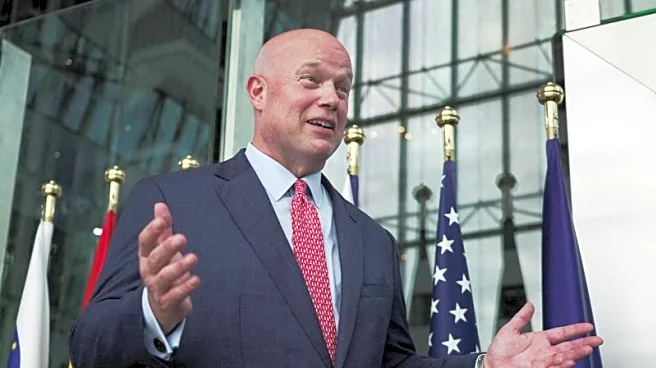
WASHINGTON, Dec 30 (Reuters) - U.S. ambassador to NATO Matthew Whitaker cast doubt on Tuesday on Russia’s accusation that Ukraine attacked President Vladimir Putin’s residence, saying he wants
to see U.S. intelligence on the incident.
"It is unclear whether it actually happened," Whitaker told Fox Business "Varney & Co." in an interview about an alleged incident which Ukraine has denied.
"It seems to me a little indelicate to be this close at a peace deal, Ukraine really wanting to get a peace deal done, and then to do something that would be viewed as reckless or not helpful," he said.
Russia said on Monday that Ukraine had attacked a presidential residence in the Novgorod region with 91 long-range attack drones. It said it would retaliate and that its negotiating stance would toughen in the talks.
Ukraine called Russia's accusations "lies" aimed at justifying more attacks on Ukraine, and its foreign minister said on Tuesday that Russia had not provided any evidence "because there's none."
U.S. President Donald Trump said on Monday that Putin told him in a phone call that Ukraine tried to attack the residence. Trump said he was "very angry" about it. Asked if there was evidence of such an attack, Trump said, "We'll find out."
The White House declined further comment on the alleged incident, while officials from the U.S. intelligence community have been close-lipped about the incident. The CIA declined to comment.
"We're going to get to the bottom of the intelligence. And for me, the most important thing is what the United States and our allies' intelligence services say about whether or not this attack actually happened," Whitaker said.
After a meeting with Ukrainian President Volodymyr Zelenskiy in Florida on Sunday, Trump said he and Zelenskiy were "maybe very close" to an agreement to end the war although the most contentious territorial issues lingered.
Zelenskiy said earlier on Tuesday: "This alleged 'residence strike' story is a complete fabrication intended to justify additional attacks against Ukraine, including Kyiv, as well as Russia’s own refusal to take necessary steps to end the war. Typical Russian lies."
Russia, which invaded Ukraine in February 2022, controls just under a fifth of its neighbour's territory and says its troops are advancing.
(Reporting by Humeyra Pamuk; Editing by Howard Goller)